
Licensed & Insured · Since 1998

Salt System Repair La Quinta, CA: When The Panel Says Low Salt And The Salt Is Fine

Proven Excellence
Our Passion is Transforming Your Backyard Vision into a Stunning Reality!
Next Door Neighborhood Favorite
Google and Yelp Reviews Below:
Why does my salt system say low salt when I just added salt?
You already bought the salt. That is how most salt system repair La Quinta calls start. The panel flashed LOW SALT, so you drove to the store, loaded two or three forty-pound bags into the trunk, poured them along the shallow end, brushed them around, and waited a day. The panel still says LOW SALT.
Stop right there. Do not buy a fourth bag. In almost every one of these calls, the salt in your pool is fine.
Here is the part nobody explains at the store. A salt cell does not measure salt. What it does is push a small current between two metal plates and watch how easily that current moves. Salty water conducts well. The cell reads that flow and works backward to a number on the screen.
Now put hard desert water in the middle of that. Calcium builds a white crust across the plates. The crust blocks the current, and the current drops. The cell cannot tell the difference between "there is less salt" and "something is in my way," so it says the only thing it knows how to say: low salt.
You have been treating a reading, not a problem. Get the water tested somewhere independent before you add one more grain.
Before you go further, one short answer to the question you actually typed into your phone.
Because the cell measures electrical flow, not salt. Scale on the plates, a cold pool, a failing flow switch, or an aging cell all cut that flow, and the panel prints the drop as "low salt." Adding more salt does not fix any of those. Test the water first with a separate meter or a shop test.
If that test comes back in range, the story is the cell, the switch, or the board behind it. Salt is easy to add and impossible to remove. Over-salting means draining and refilling with water that costs real money here. One test saves you that drain.
A lot of people bought a salt pool believing something that was never true. Worth clearing up.
A salt pool is a chlorine pool
Somebody sold you on "no more chlorine." It was a nice pitch and it was wrong, and that is not your fault.
A salt system makes chlorine. That is its whole job. Salty water flows through a plastic tube with metal plates inside. The system sends low-voltage current through those plates, the salt splits apart, and chlorine comes out the other side into your pool. Then it turns back into salt and runs the loop again.
So a salt pool is a chlorine pool. It builds its own chlorine on site instead of you carrying jugs from the garage. That part is a real benefit. The water feels softer, and you are not storing liquid chlorine in 115-degree heat where it burns off in weeks.
What it is not is chemical-free. You still test and still balance. When the generator stops making chlorine, the pool turns green as fast as any other pool, because nothing else was keeping it clean.
When the cell stops keeping up, the fix is usually one of four parts.
Swimming pool salt system repair


Salt water pool repair sounds complicated until you see how few pieces there are. Almost every salt system repair La Quinta call lands on one of four parts.
The cell. Two failures live here, and they get confused constantly. Scale is one — a white crust bridging the plates. That cleans off. Wear is the other. The coating on those plates burns away over a set number of running hours, and once it is gone, no cleaning brings it back. A scaled cell is a chore. A worn cell is a purchase.
The flow switch. A small sensor that tells the system water is moving. It has to see flow before it will make chlorine, which is a safety feature, not a flaw. Sand, scale, or a dirty filter fools it into thinking the pump is off. Cleanable, sometimes replaceable, cheap either way.
The control board and power supply. The box on the wall that turns house power into the low voltage the cell needs. Summer heat and blow-sand are hard on it. Boards do not clean. They get replaced.
The wiring at the pad. Corroded lugs, a chewed conduit, a loose ground. Common on older pads, and the reason a system reads fine one hour and dead the next.
Two of those clean. Two of those are parts.
Now the reason valley cells scale faster than cells almost anywhere else.
Hard water, white crust, and cleaning a cell without wrecking it
Coachella Valley fill water arrives hard. It shows up on your tile line, in your kettle, and on the plates of every salt cell in town.
Summer makes it worse in a way people miss. A pool here loses roughly a quarter inch a day to evaporation. Water leaves. Calcium does not. You top off, and the new water brings its own minerals in on top of what stayed behind. By August the water is more mineral-heavy than it was in April, even though you never added a thing. That is why a pool salt cell not working shows up most in late summer.
Keep calcium hardness and pH in a sane middle range and the cell lasts. Let pH ride high and the crust builds in weeks, which is why so much salt system repair La Quinta work is really water balance work.
About acid-washing a cell. Done right, it is a soak in a weak acid mix until the fizzing stops, then a rinse. Done monthly, or with acid straight from the jug, it eats the coating off the plates. Homeowners kill more cells with acid than with neglect. Weak mix, only when the crust is visible.
Salt does not stay in the cell, though. It touches everything else on the pad.
Swimming pool equipment repair
Salt water is a little harder on some parts than plain water. Not dramatic. Not a reason to rip the system out. Just real over ten or fifteen years.
The parts that notice are metal ones sitting in or near the water. Heater heat exchangers. Screws and rings on pool lights. Handrail anchors. Raw fittings at the pad. Some stone coping picks up a white bloom near the waterline, mostly where splash-out dries fast in summer heat.
A sacrificial anode is worth asking about. It is a small block of zinc that corrodes on purpose so the other metal does not. Cheap part, easy to add.
That is the honest version. Salt is not eating your pool. Balanced water and one small zinc block handle most of it. Anyone telling you a salt pool destroys plaster is selling something. Anyone telling you salt has zero effect has not opened a fifteen-year-old heater. Most salt system repair La Quinta visits end up touching one of these parts too.
Board and wiring problems are their own animal, and they are not a homeowner job.
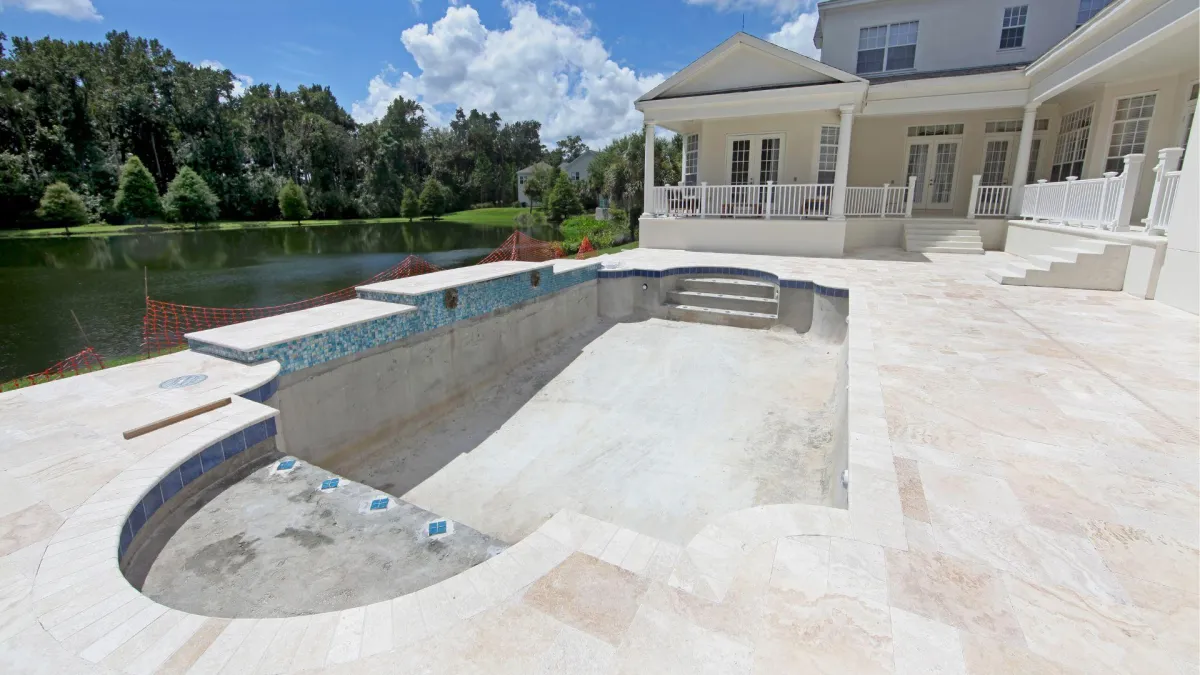
Electrical repair
Salt chlorine generator repair often turns out to be an electrical repair with a salt system attached to it.
The symptoms look like cell problems. A display that flickers, resets, or goes dark. A system that works in the morning and quits by three in the afternoon when the pad hits its hottest. Readings that jump with no pattern. Those point at the power supply, the board, or the connections feeding both.
Older pads around here still carry 1998-era single-speed setups running at 3,450 RPM with a timer clock bolted beside them, and the salt system got spliced in later. That splice is often the fault.
This is where a homeowner should stop. Line voltage sits inside that box. Bonding and grounding at a pool pad follow California electrical code for pools, and a bad ground around water is a hazard, not a maintenance item
Licensed hands only. Repairs run under CSLB License 994121.
The filter matters more to your salt system than you would guess.
Swimming pool filter repair
Here is a chain most people never connect. Dirty filter means weak flow. Weak flow means the flow switch stops seeing water. No flow signal means the generator refuses to make chlorine, whether or not the cell is fine.
So the pool goes green, the panel says the system is running, and the real problem is a cartridge nobody has pulled in two years.
Blow-sand does this fast. One monsoon wind event between July and September can load a filter in an afternoon, and the fine sand here packs into pleats tighter than leaf debris does. Torn cartridges, cracked laterals, and a leaking multiport valve all cut flow the same way.
Cleaning a filter is a homeowner job and a good one to learn. Replacing internals or chasing a pressure problem that keeps coming back is worth a visit.
The odds and ends nobody has a name for still need fixing.
General repairs
Salt calls rarely arrive alone. The cell union drips. A salt cell replacement needs new O-rings because the old ones flattened years ago. A cracked tee at the cell throws air into the line and the flow switch panics. Timers stick. A valve handle snaps off in your hand.
General repairs are where that gets handled in one visit instead of three. The pad is one system. Chasing one part while ignoring the tired thing next to it is how people pay twice.
A visit starts with a real water test, then a read on the cell, the switch, the board, and the connections. What the panel says is a clue, not a diagnosis. backed by 1 year WARRANTY.
At some point cleaning stops helping. That is worth being straight about.
Repair it or replace it
Cells have a service life measured in running hours, not calendar years. A pool that runs eight hours a day in summer burns through those hours twice as fast as one that runs four. Same part, different mileage.
Once a cell is past its hours, cleaning does nothing. The crust comes off, the plates look fine, and output is still flat, because the coating that did the work is gone. A shop that keeps acid-washing a worn cell is charging for a service that cannot help.
Related pages: swimming pool repair service in La Quinta · swimming pool services in La Quinta · pool water analysis in La Quinta · pool heater repair in La Quinta · pool automation repair in La Quinta · pool tile cleaning in La Quinta · pool equipment repair in La Quinta · pool electrical repair in La Quinta
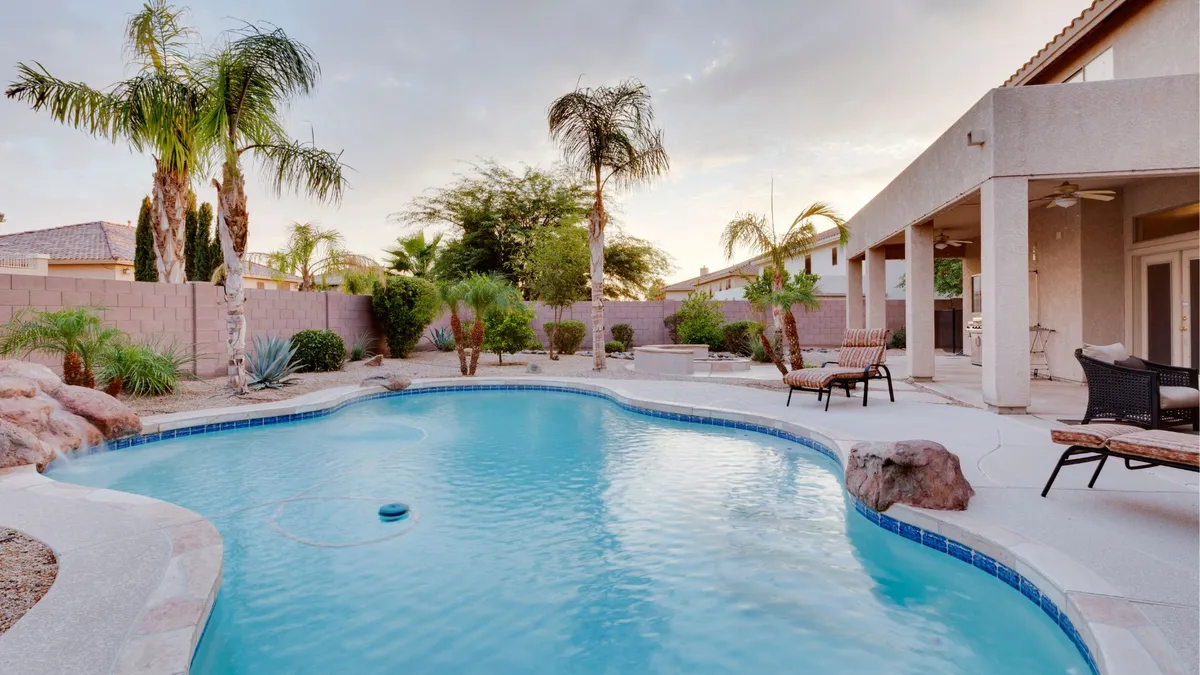
Transform Your Backyard into a Stunning Oasis with Our
Pool Repair and Construction Services
Revitalize your outdoor space with expert repairs that make your pool look brand new.
You deserve peace of mind knowing your pool repairs are handled by trusted experts.
Pool Equipment Check-Up 1 year maintenance Check-Up package to ensure long-term satisfaction.
Questions People Actually Ask
I added three bags of salt and it still says low salt. What now?
Stop adding salt and get the water tested independently. The panel reads electrical flow, not salt, so scale on the plates, a bad flow switch, or a worn cell all print as "low salt." If the test comes back in range, more bags only push you toward a drain.
Is a salt pool really chlorine-free?
No Air is getting in on the suction side, so the pump cannot pull a solid column of water. Check the water level, the lid o-ring, then the drain plugs. If those are fine, there is likely a leak in the buried suction line.
How often should the cell be cleaned?
Only when there is visible white crust on the plates. For most valley pools that lands somewhere around twice a year, more if pH runs high. Cleaning on a calendar instead of on what you see is how cells die early. Pull it, look at it, and put it back if it is clean.
Can I clean the salt cell myself?
Yes, if you are careful. Cut power, pull the cell, and soak it in a weak acid-and-water mix until the fizzing stops, then rinse well. Never use acid straight from the jug, and never make it a monthly habit. Strong or frequent acid strips the plates and shortens the cell's life.
How long does a salt cell last?
It is measured in running hours, not years. A pool running long summer schedules uses those hours up faster than one running short ones. Two identical cells bought the same week can fail years apart for that reason. Once the hours are gone, cleaning does nothing, because the working coating is gone with them.
Does salt water damage plaster, tile, or the heater?
A little, slowly, and mostly to metal. Heater heat exchangers, light rings, handrail anchors, and raw fittings notice it over ten or fifteen years. Some stone coping picks up a white bloom near the splash line. Balanced water handles most of it, and a sacrificial anode is worth asking about.
What happens if I put in too much salt?
Salty water tastes and feels off, the cell may fault out on high salt, and metal parts corrode faster. Salt does not evaporate, so the only fix is draining part of the pool and refilling. That is real money in water here. Test before you pour, every time.
The generator says it's running but chlorine is still low. Why?
Usually the cell is producing far less than the panel believes, or flow is too weak to matter. A scaled or worn cell, a dirty filter starving the flow switch, or a pump schedule too short for summer all do it. Heavy sun burns chlorine off faster than the system replaces it.
Should I leave the salt system on when the house sits empty all summer?
Usually yes, on a reduced setting, with someone checking the water. A pool sitting still in 115-degree heat with the system powered down goes green fast and comes back as a much bigger bill. If the system is off, the pool still needs service, not neglect.
Do you cover my area?
Yes. Bella Vista, the Washington Street corridor, and Rancho Santana are all regular stops, along with the rest of La Quinta from the Avenida Bermudas shop. Bella Vista and Rancho Santana see a lot of seasonal startup calls, and the Washington Street corridor sees more board failures than anywhere else.
Facebook
Instagram
LinkedIn
Youtube