Our Passion is Transforming Your Backyard Vision into a Stunning Reality!
Next Door Neighborhood Favorite
Google and Yelp Reviews Below:

Licensed & Insured · Since 1998

Pool Timer Repair in La Quinta: Reading the Dial Like a Clock Nobody Has Checked Since the Time Change

Proven Excellence
Why does my pool pump run at the wrong time of day?
The dial is a clock, and yours is probably wrong
Open the gray metal box on the wall by your equipment. Inside is a round dial with numbers around the edge and one or two little metal tabs clamped onto it. That is your pool timer, and pool timer repair in La Quinta starts with understanding that this thing is, first and last, a clock.
Here is how to read it.
The pointer. There is an arrow or a notch on the case. Whatever number on the dial sits under that pointer is what your timer believes the current time is. Check it against your phone. If the dial says 2:00 and your phone says 4:30, the timer has been running slow, and every schedule you set is off by two and a half hours.
The tabs. The tab labeled ON is the moment the pump starts. The tab labeled OFF is the moment it stops. They are clamped onto the dial edge with a small screw. They slide.
The lever. The manual switch on the side lets you run the pump now without changing the schedule. It is also the thing a pool tech bumps and forgets to put back.
That is the whole machine. A synchronous motor turns the dial one full rotation a day, and the tabs push the lever as they pass.
Now the part that catches most valley homeowners. Twice a year the clocks change, and a mechanical pool timer does not know that. Nobody resets it. So from November onward the pump runs an hour later than you think, and in a valley where afternoon power costs the most, that hour matters on the bill.
Go look at yours right now. Two out of three timers we open in La Quinta are telling the wrong time, and roughly half of those have never been corrected since the day they were installed.
A pool pump running at the wrong hours usually means the timer's dial has drifted off the real time, the ON and OFF tabs were moved and never reset, or the clock motor has failed and the dial is no longer turning. Check the pointer against a phone clock first. That finds it most of the time.
Pool timer repair in La Quinta



Pool timer repair covers three very different machines that all do the same job, and they fail in completely different ways.
Mechanical dial timers. The classic gray box. The failures are physical. A clock motor that quits, so the dial freezes and the pump either runs forever or never starts. Welded contacts inside, from years of arcing every time the pump kicks on, so the pump will not shut off no matter where the tabs sit. Stripped tab screws that will not hold a setting. Corroded terminals from the chlorine vapor and hard-water dust that live around every pad out here. And ants, which build nests inside warm electrical enclosures and bridge contacts.
Digital time clocks. A small screen, buttons, and a backup battery. These fail at the battery first. Power blips, the battery is dead, and the clock resets to midnight with a blank schedule. If your pump started running at strange hours right after a summer storm knocked the power out, that is almost certainly what happened. Beyond that, the relay inside is the wear part, same as the mechanical version.
Timers built into automation. On a Pentair, Hayward or Jandy control system, the schedule lives in software and the switching happens on relay boards. A schedule that will not hold, a pump that ignores its program, or a heater that runs on the wrong cycle usually traces to a relay, not the schedule.
What a repair looks like: we test voltage in and out, check the clock motor, inspect the contacts for pitting and welding, look at the terminal lugs, and replace whatever failed.
The diagnostic visit is $150, credited toward the repair once you approve it. See the full swimming pool repair service in La Quinta for everything above this page.

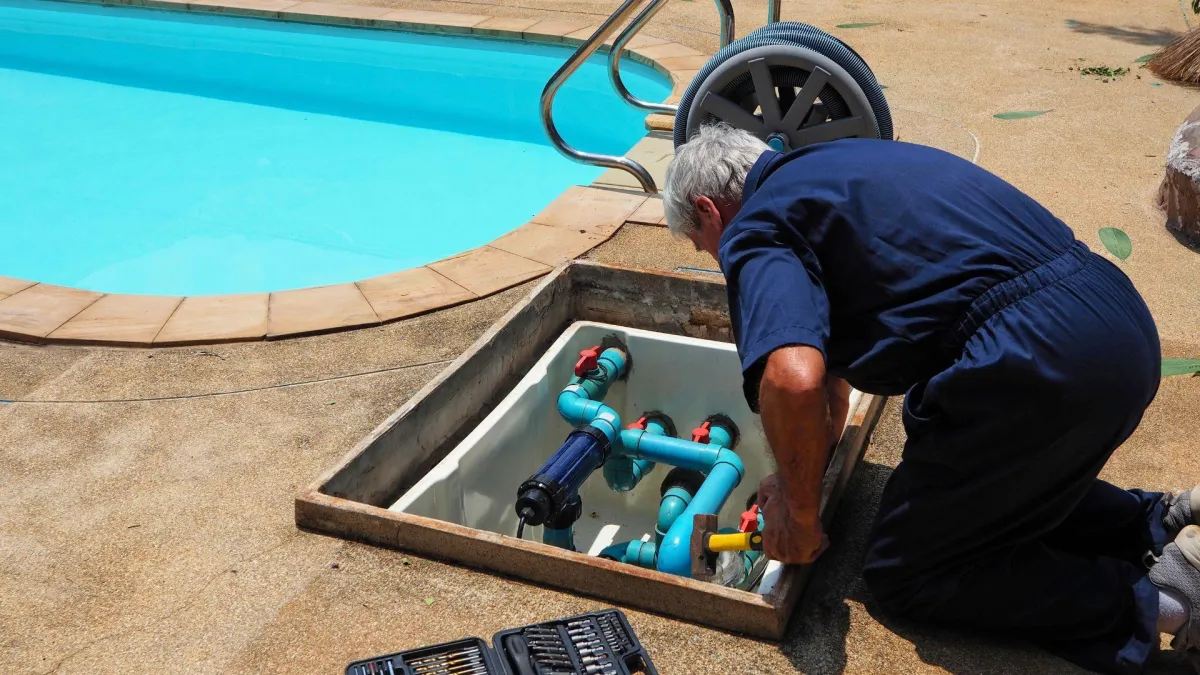
Electrical repair
Plenty of calls that come in as "my timer is broken" turn out to be electrical repair instead.
The tell is what the timer is doing versus what the pump is doing. If the dial is turning and the lever clicks at the right moment but the pump stays silent, the timer did its job. The problem is downstream. If the dial is frozen, the timer is the problem.
Common electrical faults that impersonate a bad timer:
A tripped or weak breaker. The timer switches fine, there is just no power on the other side.
Corroded lugs in the subpanel. Heat, chlorine vapor and hard-water dust eat connections. A loose lug heats up, and a hot lug eventually stops passing current.
A failed relay or contactor. On bigger systems the timer does not carry the pump load directly. It tells a relay to do it. The relay is the part that dies.
Rodent damage in conduit. More common than people expect out here, especially on pads that back up to open desert.
A bad bonding connection. Not a switching problem, but we find it while we are in there, and it matters. California Electrical Code Article 680 requires the metal parts around a pool to be bonded together with solid copper. Old valley pads lose that connection to corrosion.
If your breaker trips when the timer clicks on, stop resetting it and call. That is the pump or the wiring, not the clock.
Deeper detail lives on pool electrical repair in La Quinta. We work under CSLB License 994121
Pump repairs & installation
The reason anyone cares about a timer is the pump on the other end of it, so pump repairs and installation and timer work land in the same visit more often than not.
The big shift here is that variable-speed pumps mostly do not use an external timer at all. They have a schedule built into the drive on top of the motor. So when an old single-speed pump dies and gets replaced with a variable-speed unit, the mechanical timer on the wall becomes a dumb on-off switch feeding a pump that wants constant power and its own internal program.
That is where things go wrong. We see pads where the wall timer is still cutting power at 2:00 PM, so the variable-speed pump loses its clock every single day and restarts confused. The fix is usually to leave the pump powered and let its own schedule run, which is a wiring change, not a settings change.
California Title 20 rules require a variable-speed replacement above a certain motor size, so this situation is becoming normal rather than rare.
The upside is real. A single-speed pump spins at 3,450 RPM whenever it runs, and it only knows one speed. A variable-speed pump filters the same water at half the speed over a longer window and pulls a fraction of the watts. With valley pools running long hours in summer heat, the difference on a power bill is not small.
Motor, seal and speed detail lives on pool pump repair in La Quinta.
Automation & controls repair
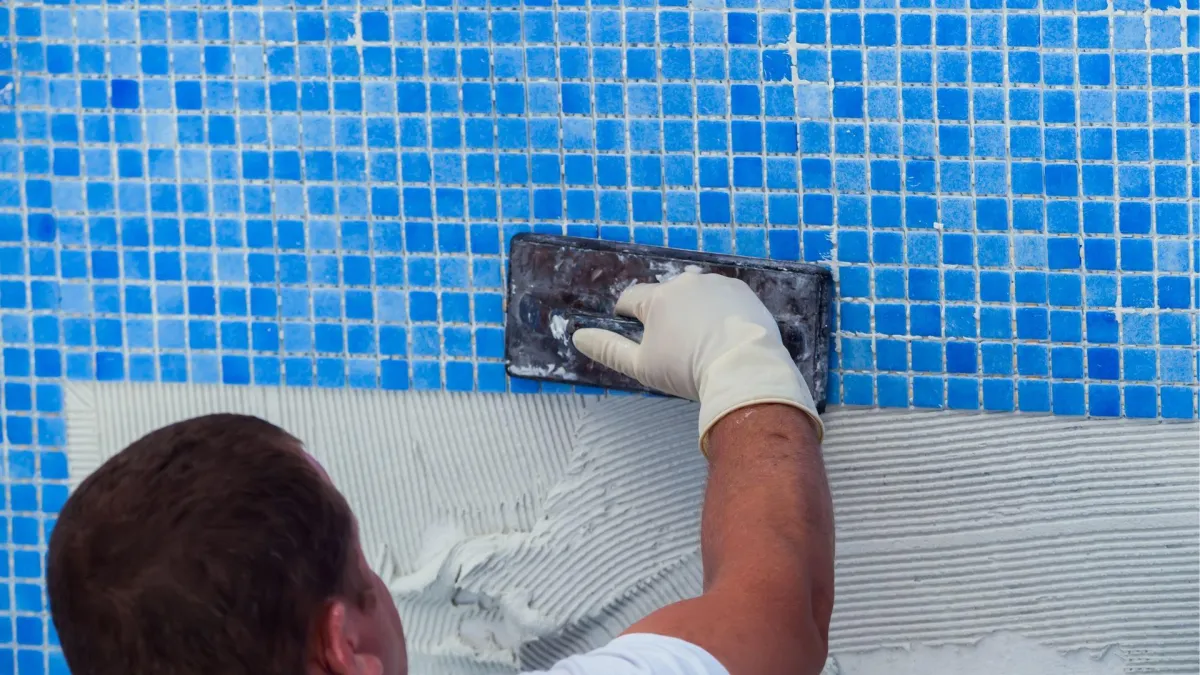
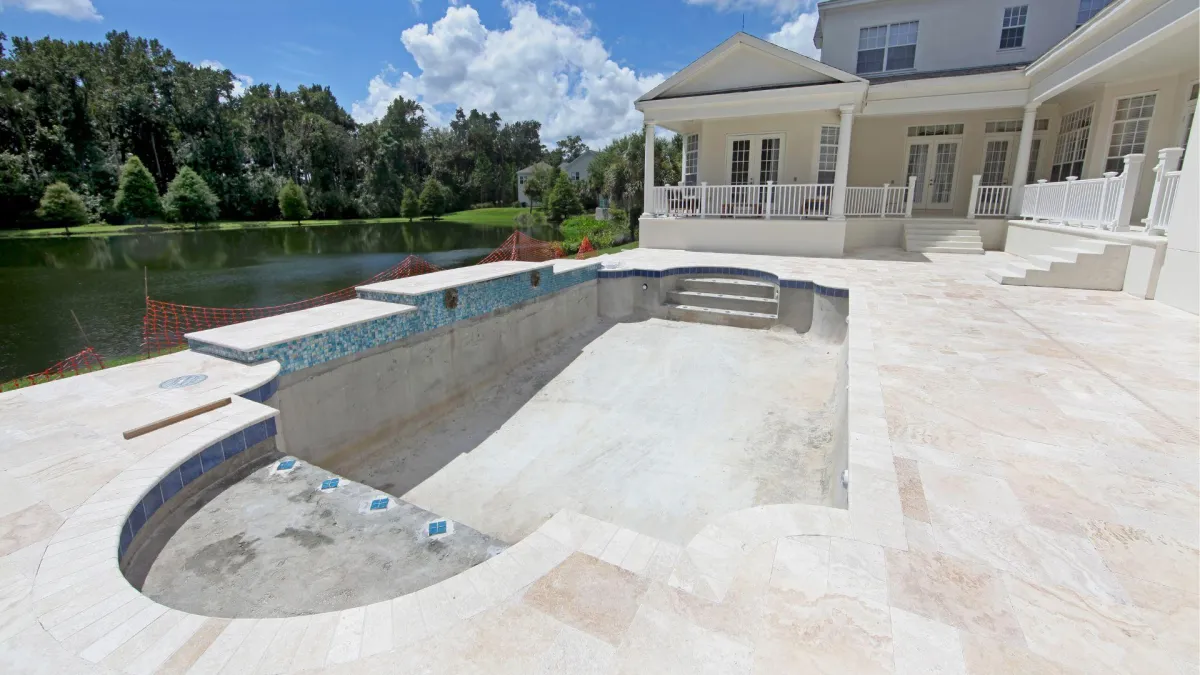
Automation and controls repair covers the systems that replaced the mechanical timer entirely.
On these, the schedule is a screen, not a dial. You set run times for the pump, the heater, the salt cell, the lights and the water feature from a wall panel, a remote, or an app. When it works, it is better than a timer in every way.
When it does not, the symptoms are specific:
A schedule that will not save. Usually a dying backup battery on the control board.
A program that runs but nothing turns on. A relay that has stopped closing.
A panel that has gone dark. Transformer, or the board itself
Everything runs at once, all day. Something has dropped into a default or service mode.
The app connects but nothing responds. The network side is fine and the board is not.
For second homes and snowbird properties that empty out in May, this visit matters more. Five months of nobody looking is how a small leak becomes a dry pump.
Related work on the pool side is covered under swimming pool services in La Quinta.
Desert-specific note, and it matters: monsoon wind from July through September packs fine sand into cabinet vents and cooling slots. Boards run hot. A board that cooked in August often does not actually fail until the first heavy-use week of the season. After a big blow, open your automation cabinet and look inside. If it is dusty brown in there, it wants cleaning before the next heat wave.
Full detail on pool automation repair in La Quinta,
Get your pump back on the right schedule
If your pump runs at odd hours, never shuts off, or will not start at all, pool timer repair in La Quinta is usually a short visit and a cheap part.
Call (760) 619-2409. Monday through Friday, 8:00 AM to 5:00 PM. Shop at 52115 Avenida Bermudas, La Quinta, CA 92253. Online at cvpoolsrepair.com, or use our contact page for CV Pools in La Quinta.
The diagnostic is $150 and it comes off the repair once you approve it. Estimates on remodels, replaster, new builds and equipment upgrades are free.
We have been opening valley equipment boxes since 1998. Reviews are at 4.2 Rating across 25 reviews.
Before you call, go look at the pointer on your dial. Tell us what time it thinks it is.
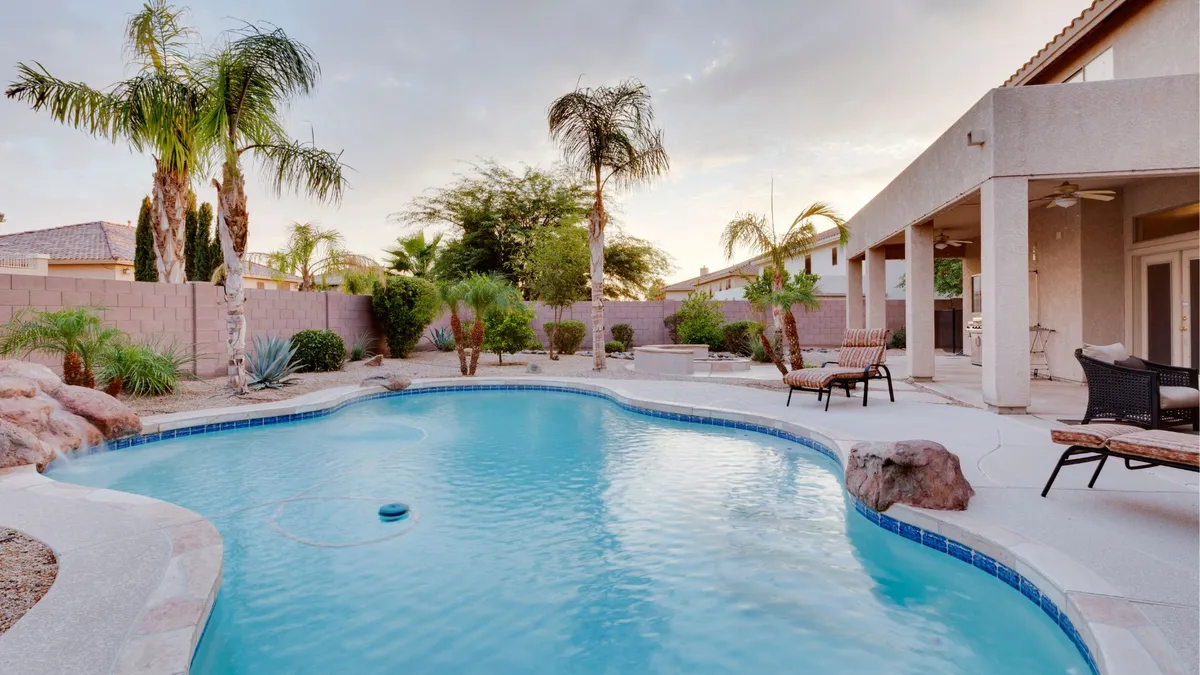
Transform Your Backyard into a Stunning Oasis with Our
Pool Repair and Construction Services
Revitalize your outdoor space with expert repairs that make your pool look brand new.
You deserve peace of mind knowing your pool repairs are handled by trusted experts.
Pool Equipment Check-Up 1 year maintenance Check-Up package to ensure long-term satisfaction.
Questions People Actually Ask
My pool pump never shuts off. Is that the timer?
Often yes, and usually welded contacts. Years of arcing every time the pump starts can fuse the switch closed, so the pump keeps running no matter where the tabs sit. It can also be a clock motor that quit with the lever held down.
How many hours a day should my pool pump run here?
Long enough to turn the water over once, which depends on pool size and pump speed. Valley pools generally want more run time in summer than a mild climate would, because heat and sun burn off sanitizer faster. A variable-speed pump does this at low speed over a longer window, which costs less than a short run at full speed.
The clocks changed and my pump schedule is off. Do I fix the timer myself?
On a mechanical dial, yes. Rotate the dial so the current time lines up with the pointer. Do not move the tabs. On a digital timer, the clock is a menu setting. If you are not sure what you are looking at, take a photo and call.
My digital timer reset to midnight after a power outage. Why?
Dead backup battery on the board. When power drops, that battery holds the clock. Once it is gone, every outage wipes the time and sometimes the schedule too.
My new variable-speed pump loses its schedule every day. What is going on?
The old wall timer is probably still cutting power to it. A variable-speed pump needs constant power so it can run its own internal schedule. It is a wiring change, and it is a common leftover from a pump swap.
There are ants inside my timer box. Does that matter?
Yes. Ants nest in warm electrical enclosures and their bodies bridge contacts, which causes intermittent switching and pitting. We clear them and seal the enclosure, because they come back to the same box.
My timer looks fine but the pump does not start. What next?
If the dial is turning and you hear the lever click at the right time, the timer worked. Look at the breaker, the relay and the pump itself. That is an electrical or pump call rather than a timer call.
Should I upgrade my mechanical timer to automation?
It depends on how much gear you have. One pump and one light does fine on a dial. A pump, heater, spa, salt cell and water feature all on separate timers is exactly the mess automation was built to clean up.
My equipment is in full sun. Does that hurt the timer?
It does. Sun destroys the enclosure gasket, then dust and wind-driven grit get in and corrode the terminals. Shade over the pad is one of the cheapest ways to extend the life of everything on it.
Facebook
Instagram
LinkedIn
Youtube