
Licensed & Insured · Since 1998

Pool Tile Installation & Repair in La Quinta, CA

Proven Excellence
Our Passion is Transforming Your Backyard Vision into a Stunning Reality!
Next Door Neighborhood Favorite
Google and Yelp Reviews Below:
Who repairs spas and hot tubs in La Quinta, CA?
Do I need my pool tile cleaned or replaced?
Before you call anybody about pool tile installation in La Quinta, go do this. It takes four minutes and it will tell you more than a photo ever will.
Walk the edge of your pool. Get down low. Make a loose fist and tap your knuckle along the waterline tile, one tile at a time, all the way around. Listen to the sound each one makes.
A tile that is still bonded gives you a tight little click. Sharp. Short. It stops the second you lift your hand. That tile is glued to the bond beam the way it was the day it was set. Whatever ugly white stuff is sitting on top of it is sitting on the surface, and surface problems get cleaned off.
A tile that has let go gives you a low thock. Hollow. Loose. A bit like tapping a cardboard box. That sound is an air pocket, or worse, water sitting in the gap between the tile and the shell. That tile is not dirty. That tile is done.
Now mark what you found. Painter's tape works. Most La Quinta pool tile we look at comes back mixed: three or four hollow tiles clustered under the skimmer or at a corner, and the rest solid but crusted white.
That mix is the whole decision. Solid and crusted means cleaning. Hollow means the tile comes off and new tile goes on. Mostly hollow along a whole run means the run gets replaced together, because pulling one loose tile out of a failed row usually takes its neighbors with it.
That is the same test our crew runs on the first visit. You just did it for free. Pool tile installation in La Quinta starts with knowing which of those two sounds your pool is making
Tap each waterline tile. A sharp click means the tile is bonded and the white crust is surface calcium, which bead blasting removes. A hollow thock means water is behind the tile and it needs replacing, not cleaning. Mixed results are normal. CV Pools in La Quinta checks both on one visit.
WHAT A TILE JOB LOOKS LIKE, DAY BY DAY
Here is the real sequence a pool tile installation in La Quinta follows, so nothing surprises you.
1. The visit. We tap the line ourselves, check the bond beam, look at the grout, test the water, and look for anything feeding water behind the tile. If it is a repair diagnosis, the visit is $150 and that $150 comes off the approved repair. Remodels, replaster, new builds and equipment upgrades are estimated free.
2. The plan and the sample. You see actual tile at your pool in daylight. We write down exactly which runs get cleaned, which get regrouted, which get replaced, and what each piece costs
3. Water down. Most waterline work needs the level dropped below the tile band. Cleaning-only jobs need it dropped a few inches. Full replacement needs more. We handle the drop and tell you what your pump should be doing while it is down.
4. Demo or mask. Replacement day starts with careful removal so the bond beam stays intact. Cleaning day starts with masking the coping and deck and setting up containment for the media.
5. Prep the substrate. Old thinset comes off. Cracks in the beam get addressed. The surface gets floated flat and straight, because straight is what your eye reads later.
6. Set, grout, seal. Pool tile goes on, joints get packed, everything gets cleaned and sealed. Grout needs its cure time before water comes back up.
7. Refill and rebalance. Water back up, then chemistry corrected so the new work is not immediately scaling again. This step is the one most often skipped by the cheap bid.
Typical waterline job: two to four working days on site, plus fill and cure time.
The Tile Services



Swimming Pool Tile Installation
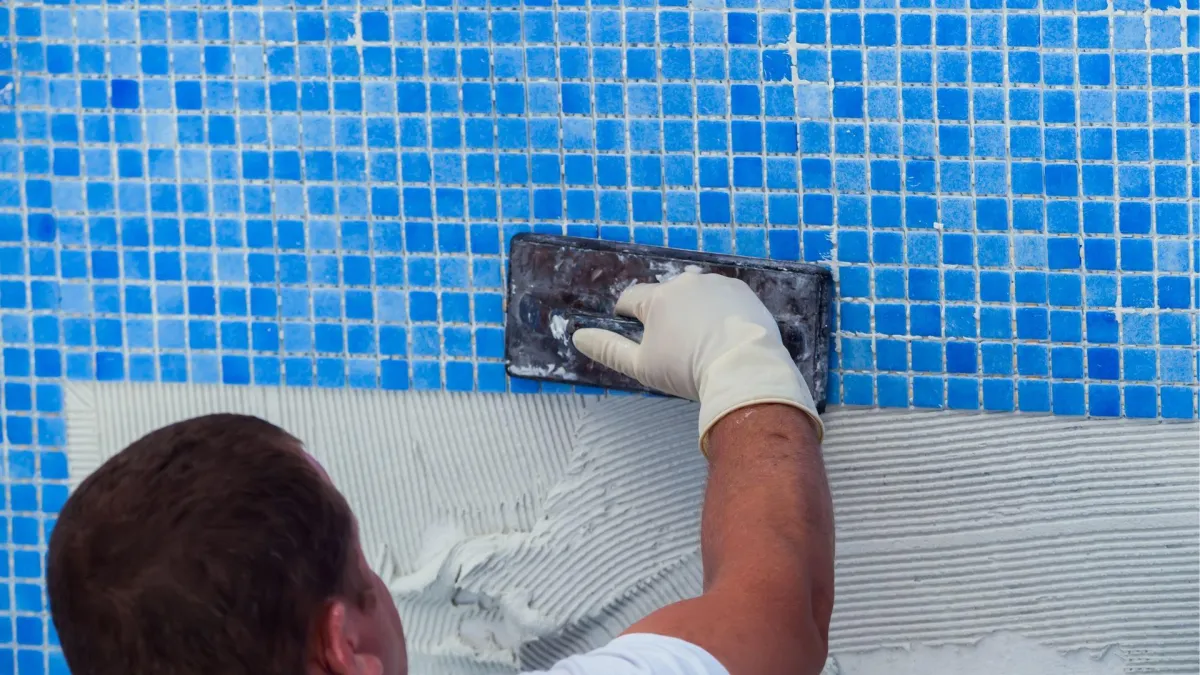
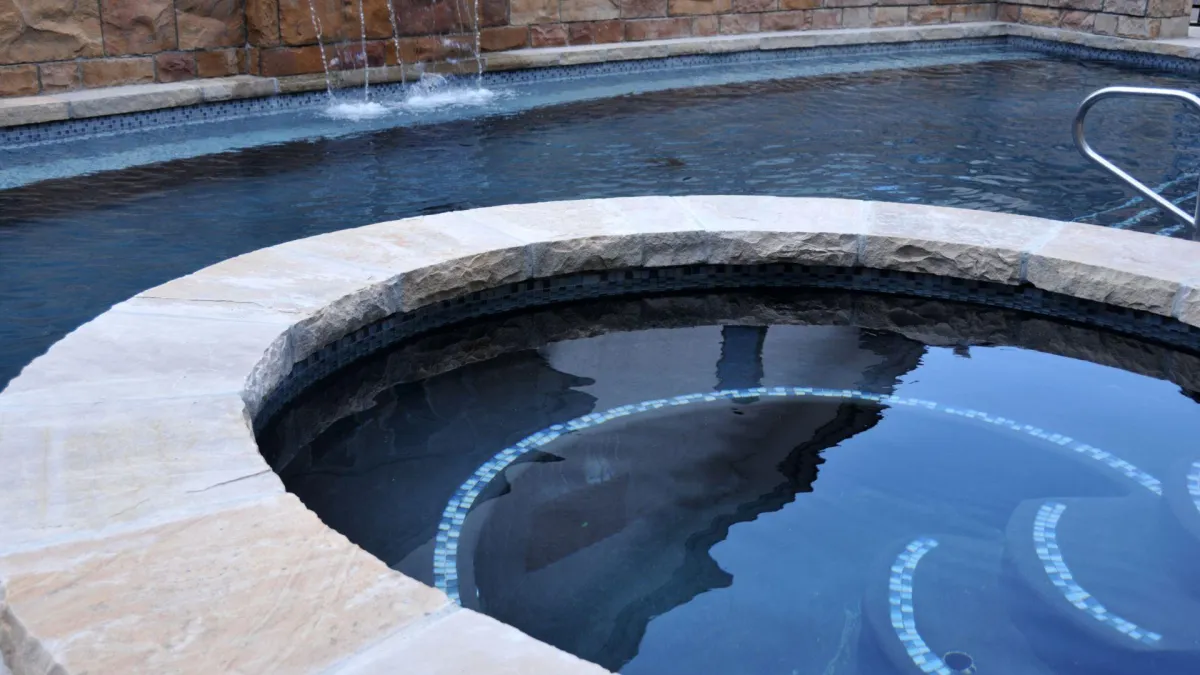
New tile at the waterline, on spa spillways, on raised bond beams, on step markers, and on the dam wall between spa and pool. Swimming pool tile installation in La Quinta, CA is the job we run most often as part of a remodel, but plenty of homeowners do it on its own because the pool is fine and the tile band is what dates it. We remove the old tile without chewing up the bond beam, prep and float the surface flat, set the new tile, grout it, and seal it. Straight lines matter more than people think. A waterline band that wanders by a quarter inch reads as sloppy from every chair on the deck. Free estimates on remodels and new builds.
Swimming pool tile repair
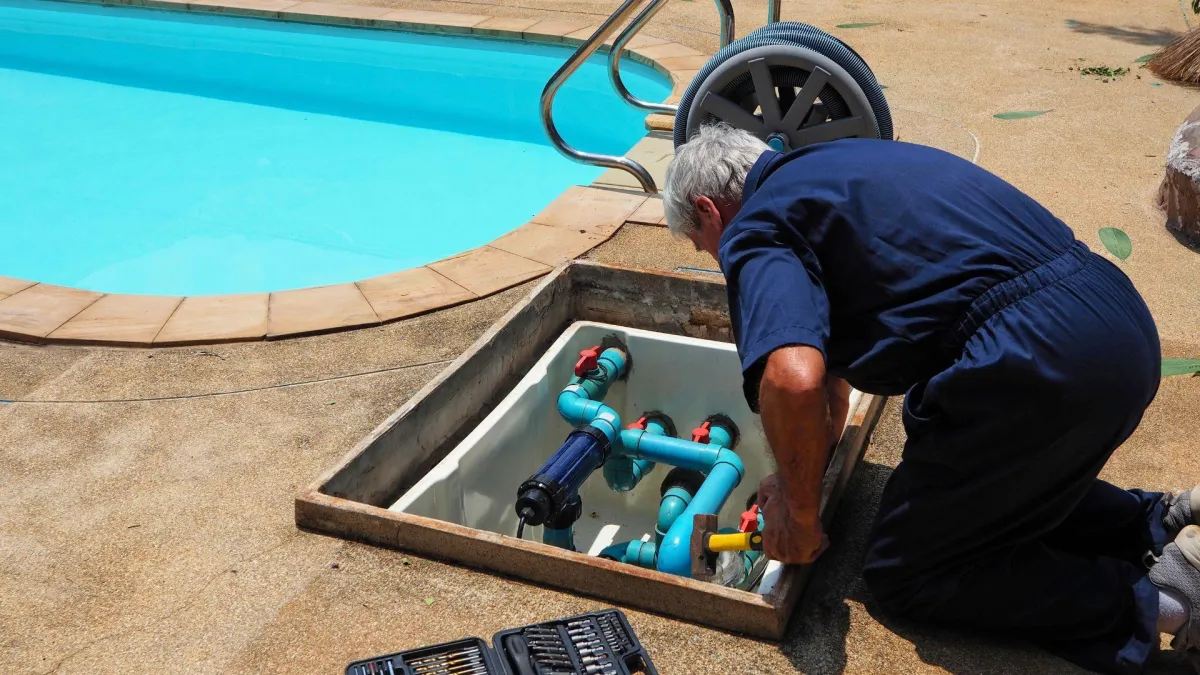
Repair is the narrow fix: a handful of tiles, not the whole run. Popped pieces after a freeze-thaw stretch. A cracked tile where the pole hit it. A spillway lip letting water past. Swimming pool tile repair means we pull just what failed, find why it failed, fix that, and reset. If water is getting behind the tile from a leaking fixture, resetting the tile alone buys you one season.
Swimming pool tile cleaning
Swimming pool tile cleaning is bead blasting, done at low pressure with a media chosen for your tile type . It lifts calcium off glazed ceramic, porcelain and glass without stripping the glaze, which is the part acid and pumice cannot promise. We mask, blast, rinse, and vacuum out the media. Most waterline runs are a one-day job.
Tile replacement
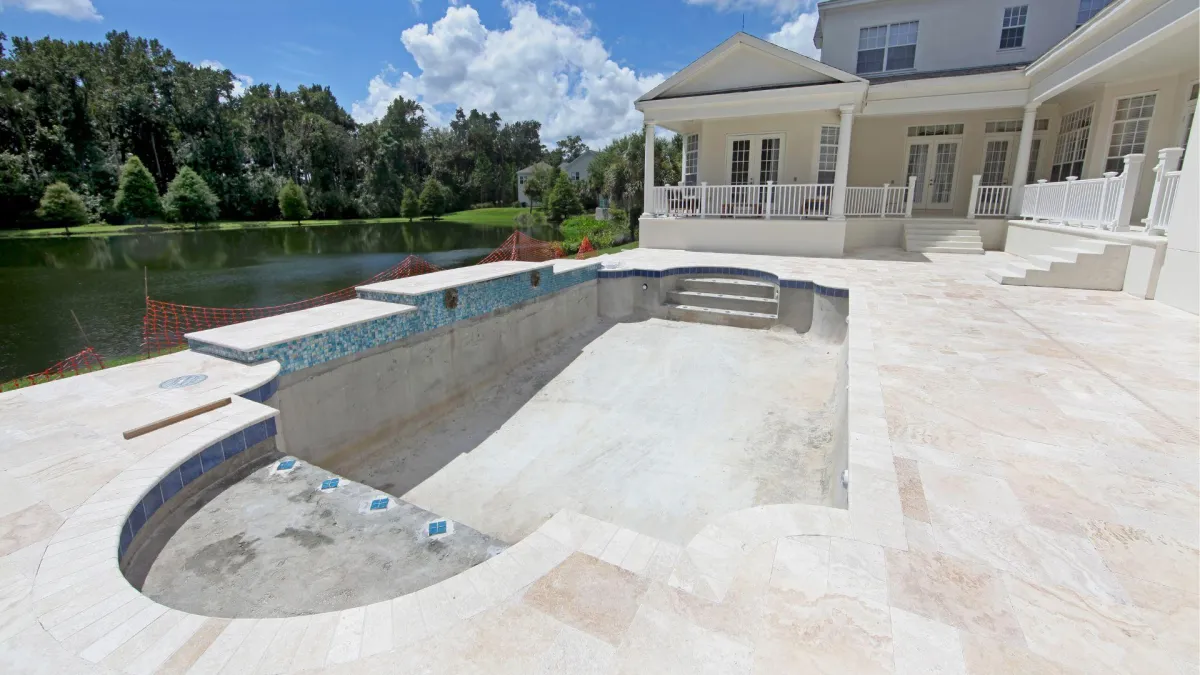
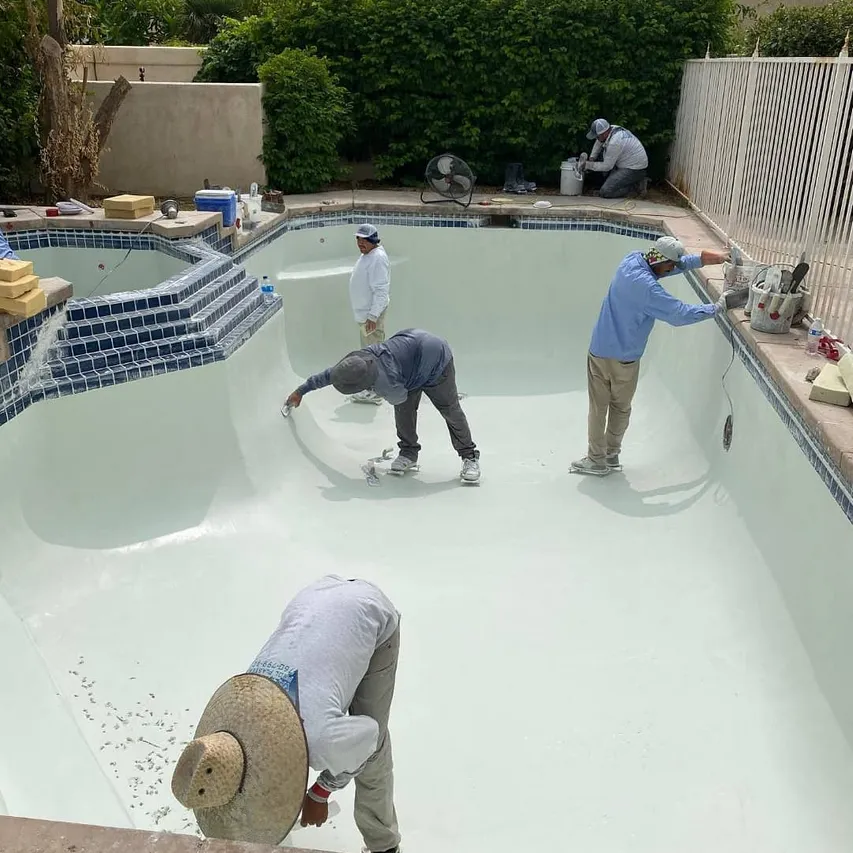
Tile replacement is for the hollow run. We take the band down to sound substrate, check the bond beam for cracks, rebuild where needed, and set new pool tile. This is also the moment to change the look, since you are paying for the labor either way.
Tile restoration
Tile restoration brings your original pool tile back instead of buying a new band. Descale, reset the loose pieces, cut out and replace failed joints, reseal. On a 1990s pool with a discontinued band, restoration is usually smarter money than a mismatch.
Tile regrouting
Grout fails before pool tile does here. Tile regrouting means cutting the dead grout out of the joints, packing new grout in, and sealing it so water stops finding the back of the tile. It often saves a full replacement if you catch it early.
Grout cleaning
Deck tile, spa surrounds, steps and patio joints go gray and chalky from hard water and blown sand. Grout cleaning brings the color back without blasting the joints out of the tile.
Grout staining
When joints are patchy, sun-faded, or half-replaced and mismatched, grout staining evens the whole field out or changes the color entirely without pulling a single tile. It is the cheapest way to make an old deck read as new.
Tile design services
Tile design services means we bring pool tile samples to your deck and look at them in valley daylight, not under a showroom bulb. Glass, porcelain, stone, or the classic six-inch band. We hold them against your plaster color and your coping before anybody orders anything.
Why the valley’s Water Eats Tile and Grout
Most people think the white band is dirt. It is not. It is rock.
Water out here arrives already loaded with dissolved calcium and other minerals. When the surface evaporates and in a valley summer it evaporates fast the water leaves but the minerals stay. The pool gets harder and harder as the season goes. Once the water passes the point where it can hold any more, the calcium comes out of solution and crystallizes on the first hot surface it touches. That surface is your waterline pool tile, because it sits right at the air line and it bakes.
That is why the band forms exactly at the water level and nowhere else. It is also why it comes back after you clean it if nobody rebalances the water afterward.
Grout fails on a second track. Grout is porous. Water works into it, minerals crystallize inside the pores, and the crystals push the grout apart from the inside. Add blowing sand, which sandblasts the joints all spring, and add deck tile that hits 115° surface temperature in July and cools 40 degrees overnight. Everything expands and contracts, every day, all summer. The joints lose first.
Once a joint opens, water gets behind the tile face. Now you have the hollow thock instead of the click, and you are in replacement territory instead of cleaning territory.
The people this hits hardest are second-home owners. A pool in Painted Cove or Monticello
that runs unattended from May through October builds a scale line all summer with nobody standing next to it. The owner flies back in November, walks out to the deck, and there is a white shelf an inch and a half thick that was not there in April. It did not happen overnight. It happened over five months of evaporation with nobody watching.
Picking tile and Grout that Hold Up in Desert Sun
If you are choosing pool tile, choose for this climate, not for a photo taken in Ohio.
Frost-rated porcelain is the safe default. It is dense, it absorbs almost no water, and low absorption is what keeps a tile from cracking when a cold January night follows a warm afternoon. Dense tile also holds calcium less stubbornly, so cleanings go faster.
Glass looks incredible and asks more of you. It is not a bad choice here, but it is a choice with strings. Glass shows scale more plainly than anything else because you can see the crust against a mirror. It needs a setting material rated for glass and a blast media matched to it. Done right it lasts. Done cheap it spiders.
Watch the color under real sun. Deep blues and blacks look rich in a sample tray and read almost black under a July sky at four in the afternoon. Take the sample outside and hold it at the water. Do it twice, morning and late day.
Grout matters as much as the pool tile. For water contact and for surface temperatures at 115°, we set with grout rated for constant immersion and movement, then seal it. Mid-tone grout hides valley water better than bright white, which starts showing mineral streaks within a season.
Skip anything porous at the waterline. Unsealed natural stone and soft travertine drink water, and around here water means minerals. On coping and deck it can work with the right sealer and a schedule. Right at the waterline it is a maintenance bill you signed up for.
Transform Your Backyard into a Stunning Oasis with Our
Pool Repair and Construction Services
Revitalize your outdoor space with expert repairs that make your pool look brand new.
You deserve peace of mind knowing your pool repairs are handled by trusted experts.
Pool Equipment Check-Up 1 year maintenance Check-Up package to ensure long-term satisfaction.
Questions People Actually Ask
What is the white crust on my pool tile?
It is calcium scale, not dirt. Valley water carries a lot of dissolved minerals. Summer evaporation leaves the minerals behind and concentrates them until calcium crystallizes on the hottest surface it touches, which is your waterline tile. Balanced chemicals slow it down but do not stop it here.
Can the calcium be cleaned off, or does the tile have to be replaced?
Tap it. If the tile clicks solid, cleaning works and you keep your original tile. If it sounds hollow, water is already behind the face and cleaning only delays replacement. Most pools come back mixed, so we price cleaning and spot replacement together on one estimate.
Will bead blasting crack my tile?
Not when the media and pressure match your tile. We run low pressure and pick the media for glazed ceramic, porcelain or glass. The risk people have heard about comes from aggressive media on delicate glazes or soft stone coping. We mask the coping and test a small area first.
Can you match tile from the 1990s that nobody makes anymore?
Sometimes. Discontinued lines occasionally turn up through suppliers, and salvage from a hidden run inside your own pool can cover a small repair. When matching is not possible, restoration of what you have usually beats a partial replacement that looks patched. We show you both options.
How long does a waterline tile job take?
Cleaning only is usually one day. A regrout runs one to two. Full waterline replacement is generally two to four working days on site, and then you add time to refill and for grout to cure before the pool goes back into normal use. Weather and pool size move it
Do you have to drain the pool?
Almost never all the way. Waterline work needs the level dropped below the tile band, not the pool emptied. Full draining brings its own risk in this soil, so we avoid it unless the job genuinely calls for it, like a replaster running at the same time.
What does pool tile work cost?
Pool tile pricing runs per linear foot and depends on the tile, the length of the run, and how much prep the bond beam needs
Is glass tile a bad idea in this much sun?
No, but it is less forgiving. Glass shows scale clearly and needs the correct setting material and blast media. Installed properly with the right grout and a maintenance plan, glass holds up fine in La Quinta. Installed on the cheap, it is the first thing to fail
Can I clean it myself with acid or a pumice stone?
You can, and both carry a cost. Pumice scratches glaze and leaves a dull haze that shows worse than the calcium did. Acid attacks grout joints and can etch stone coping. Neither reaches scale that has built up thick. On solid tile, blasting is faster and gentler.
How often does waterline tile need attention here?
Most La Quinta pool tile wants a cleaning every one to three years, and that window shortens for pools left running through summer with nobody watching the chemistry. Grout typically needs attention on a longer cycle. Tap the line each fall and you will catch a problem while it is still small.
Facebook
Instagram
LinkedIn
Youtube