
Licensed & Insured · Since 1998

Pool Tile Cleaning in La Quinta: Reading the White Line Before You Scrub It

Proven Excellence
Our Passion is Transforming Your Backyard Vision into a Stunning Reality!
Next Door Neighborhood Favorite
Google and Yelp Reviews Below:
Tile cleaning in La Quinta
That white band is a receipt. It is not dirt. It is a record of every gallon that left your pool as steam and did not take its minerals with it. Most people who call us about pool tile cleaning in La Quinta think they are looking at a stain. They are actually looking at math.
Here in the desert a pool can give up close to a quarter inch a day through the summer. That water goes into the air clean. Everything it was carrying calcium, magnesium, all the hardness that came out of the tap stays in the pool. Then you top the pool off with more hard water. The pool gets harder every week.
The band sits right at the waterline for a reason. That is the warmest, most stirred-up strip of water in the pool, and the only water touching air. Minerals fall out of solution there first and grab the tile.
So the band is not neglect. Plenty of people have already gone at it with a stiff brush, then a pumice stone, then a bottle from the pool store. Usually one did nothing and one left scratches. The real question is not how to scrub it off. It is what the tile under it can still do.
How do you get calcium off pool tile?
Soft, chalky calcium usually comes off with a scale-removing product and a soft brush. Hard, glassy calcium does not. That kind is bonded to the tile and needs low-pressure media blasting, where a fine material is streamed across the surface to lift the deposit without grinding the tile face. Acid and pumice are the two things that most often cause permanent damage.
Almost every useful decision about that band comes from one question: which kind of calcium is it? There are two, and they behave nothing alike.
Calcium carbonate is the soft one. It looks chalky and white-gray. Run a fingernail across it and some powders off under your nail. It flakes, and sometimes sheets off when the level drops. This is the friendly kind, and a homeowner with the right product can often handle it.
Calcium silicate is the hard one. It looks glassy and slightly shiny, like the tile grew a second skin. Your fingernail slides right over it. Nothing powders off. It builds over years and is chemically stuck to the tile, not just sitting on it. No brush and no household product will move it.
Here is the honest part. By the time somebody calls, they usually have the hard kind. The soft kind gets brushed off and forgotten. People call when the brush stopped working, which is another way of saying the deposit already bonded.
Telling the two apart takes about ten seconds in person, and it changes the whole plan.
Tile cleaning on a pool is not the same job as cleaning tile in a shower, and the difference is what protects your surface. Four things get tried on that white band. Only some of them work.
Hand scrubbing works on soft, fresh calcium and does nothing on hard deposits. It is free, so try it first, and stop when it stops working.
Pumice stones take calcium off. They also take the glaze off. On glazed ceramic a pumice stone leaves a dull, scratched track that catches dirt from then on. On glass mosaic it is worse. Pumice is a last resort on plaster, not a tool for tile.
Acid-based products dissolve calcium. They also eat grout, etch some stone, and burn skin. Acid around a pool is not something to be casual with, and it swings water chemistry hard enough to set up the conditions that put the band back.
Low-pressure media blasting is what actually solves the hard kind. A controlled stream of fine material is run across the tile and lifts the deposit off in a thin layer, without grinding into the tile face.
Swimming pool tile cleaning in La Quinta


Swimming pool tile cleaning goes wrong when the media is wrong for the tile. A glazed ceramic tile, a glass mosaic, and a piece of porous natural stone coping all respond differently to the same stream. Too aggressive and you get a hazed glaze, micro-fractures in glass, or a stone surface that drinks in stains from that day forward. Too soft and the calcium stays and the customer paid for nothing.
CV Pools matches the surface before any work starts, and tests a small area where nobody would look first. The whole point of proper pool tile cleaning in La Quinta is that the tile looks like it did the day it was set — not clean and scratched.
Glass mosaic waterline tile shows up a lot along the Avenue 49 corridor, and that run of homes is where media choice matters most. Glass hides nothing. Any mistake on glass is visible from across the yard.

Swimming pool tile repair
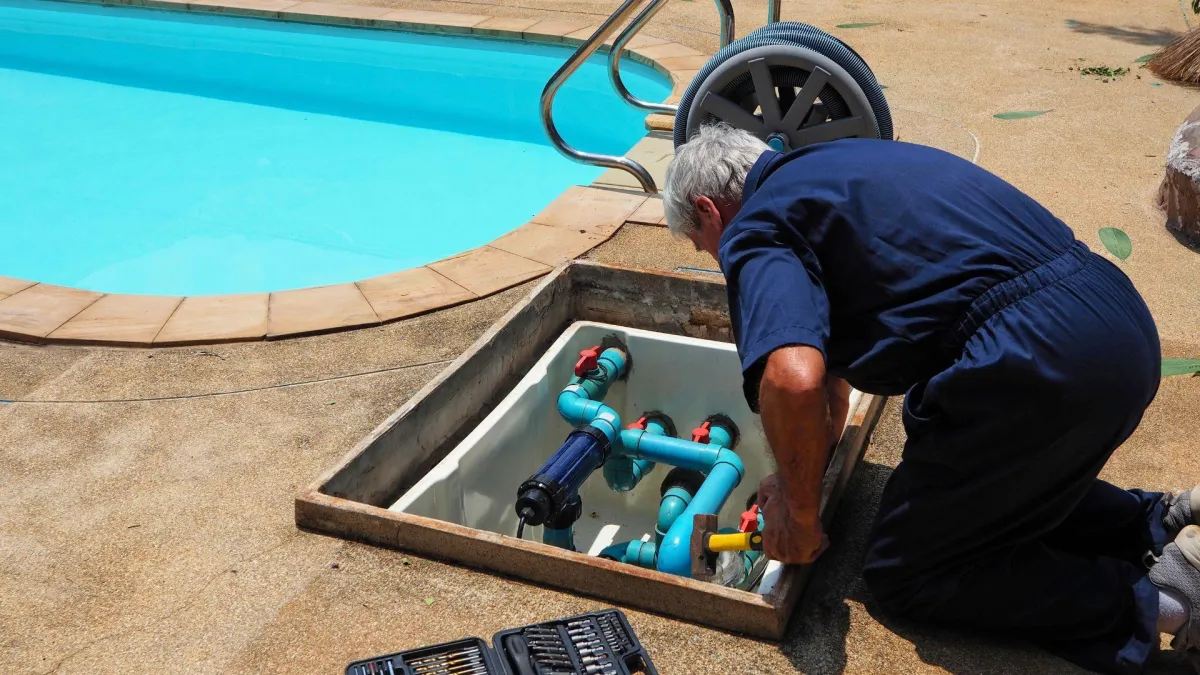
Some tile should not be cleaned at all, because it is already on its way off the wall. Tap along the waterline with a knuckle. Solid tile sounds tight and sharp. A hollow, dull sound means water has gotten behind the tile face and the bond is failing. That is the one test worth doing yourself before you spend a dollar.
Cleaning a tile that has already let go only delays a replacement, and the customer paid twice. Swimming pool tile repair is the right call when tiles are loose, cracked, or drumming hollow. A few failed tiles get pulled and reset. A long hollow run means the whole band comes off and goes back on properly.
CV Pools tells people which one they are looking at before they pay for either. On a walk-through the tile gets tapped, the deposit gets identified as soft or hard, and the grout gets checked.
Grout cleaning
Hard water does not stop at the tile face. It works into the grout joints and leaves them gray, chalky and streaked, so the tile can come out perfect and the wall still looks tired. Heat cycles do their own damage a joint that bakes at 115 degrees all afternoon and cools at night eventually cracks and powders.
Grout cleaning handles the surface staining when the joints are still sound. It is a lighter touch than the tile itself gets, because grout is soft and going after it too hard blows the joints right out. That is the most common way a DIY cleaning turns into a repair bill.
Tile regrouting
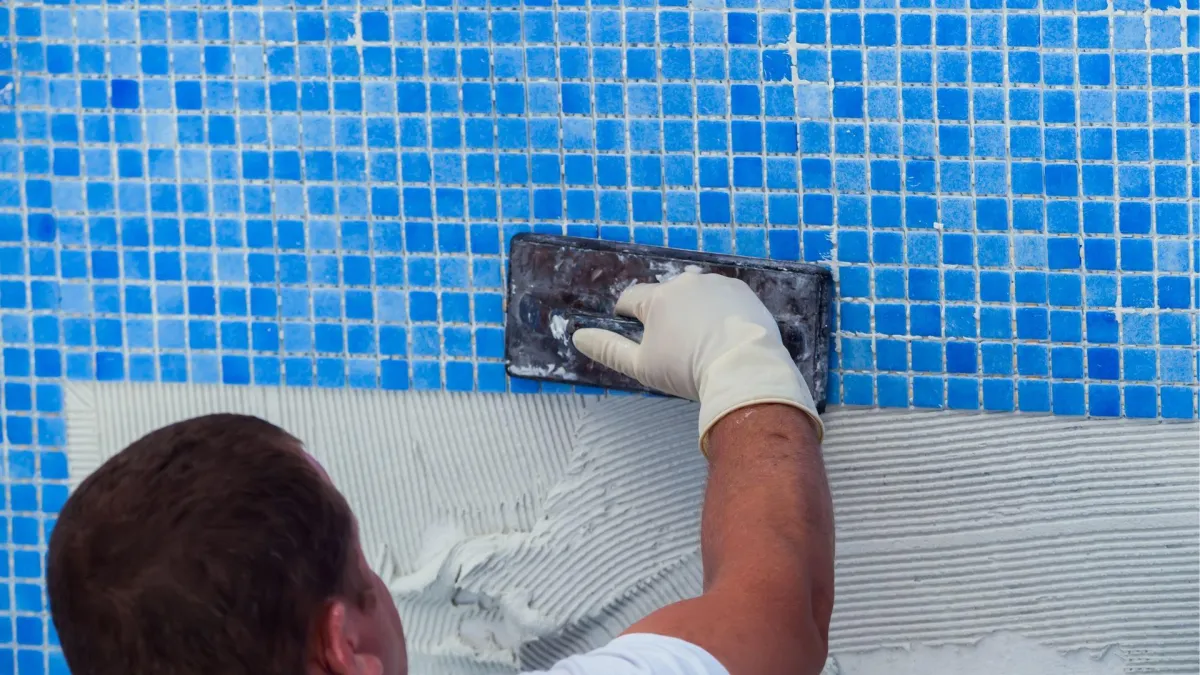
When joints are cracked, crumbling, or missing in places, cleaning them is a waste. Tile regrouting means cutting the old grout out and putting new material in, which is the only fix that actually holds. Open grout is how water gets behind tile in the first place, so this is not a cosmetic job. It is what keeps the next repair from happening. If the whole band is coming off anyway, tile restoration in La Quinta and pool tile regrouting are usually priced together.
Tile removal
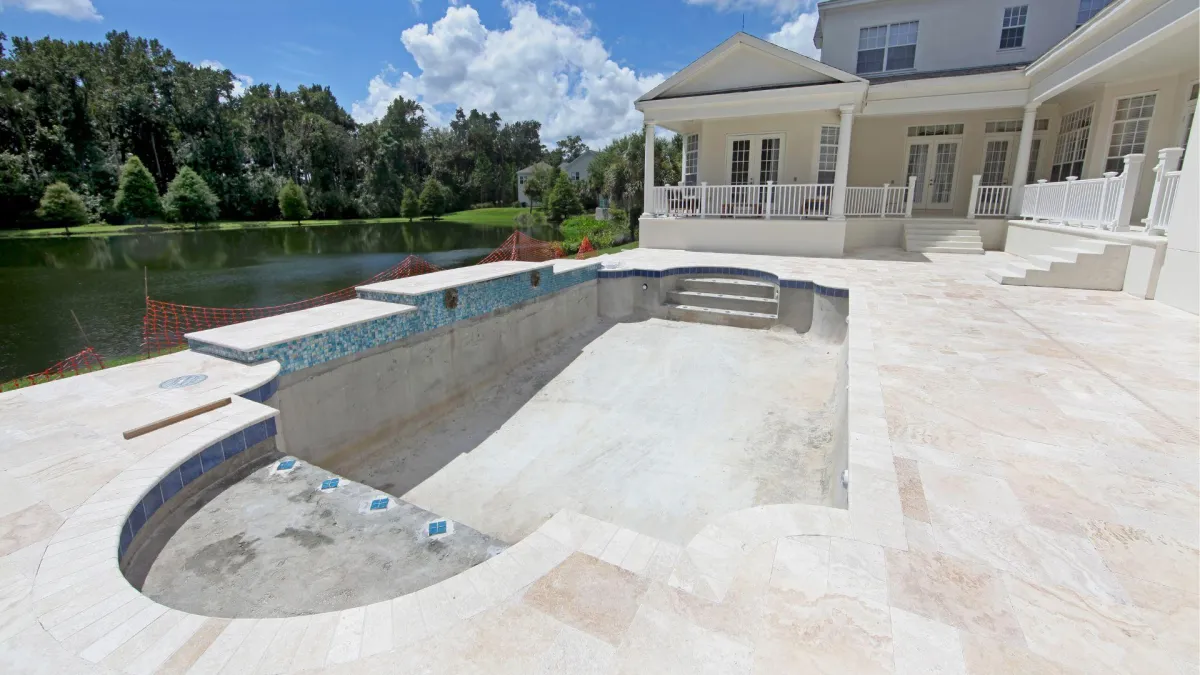
Tile removal is the step people hope to avoid, and sometimes it is the cheapest thing on the table. If the deposit is hard, the tile is dated, and half the band sounds hollow, spending money to clean it is spending money on a wall that is coming down inside two years.
Removal is also routine when a pool is being re plastered. The waterline band comes off, the shell gets prepped, and new tile goes on before the new surface is applied. Doing it in that order is standard, and it is why timing matters so much on this job. If a remodel is anywhere in your next few years, say so early — it changes the advice completely. Pool tile installation and tile repairs in La Quinta covers what goes back up.
Why It Comes Back, And What Slows It Down
Nobody wants to pay for this twice, so here is the part that saves you money.
The band comes back because the cause never left. Water evaporates, hardness concentrates, and the waterline is where it lands. What changes is how fast.
Keep the water balance in range. A pool sitting scale-forming lays down new deposit within a season. A pool pushed too far the other way starts eating plaster and grout instead.
Watch calcium hardness, not just chlorine and pH. On a pool only ever topped off all summer and never partially refreshed, hardness climbs year over year. A partial drain and refill resets that number. In this climate a drain carries its own risk — a shell can pop or crack if it is emptied at the wrong time of year or left down too long — so that is a conversation to have first, not something to just go do on a Saturday. A pool water analysis in La Quinta tells you where you stand.
Keep the water level steady. A level that swings smears the band wider.
And address the band while it is still soft. Soft calcium is a cleaning. Hard calcium is a project.
Timing is the other place people leave money on the table
Pool tile cleaning in La Quinta pairs naturally with work you may already be planning. If the pool is getting resurfaced, the tile is coming off or getting cleaned as part of that anyway, and the pool is already drained and staged. Doing it then instead of as a separate visit saves a mobilization, a drain, and a refill. Pool resurfacing and replastering in La Quinta is the natural pairing.
There is also a season to it. Snowbird and second-home owners want the pool looking right before they land, so late fall books solid. Homes around the Avenida Navarro blocks and the Park Avenue tracts sit empty half the year, and the calls all arrive at once in October.
Summer is quieter and easier to get on the calendar. The tradeoff is working in the heat, which is a real thing for outdoor work here.
Every part of town gives this job a slightly different shape.
Transform Your Backyard into a Stunning Oasis with Our
Pool Repair and Construction Services
Revitalize your outdoor space with expert repairs that make your pool look brand new.
You deserve peace of mind knowing your pool repairs are handled by trusted experts.
Pool Equipment Check-Up 1 year maintenance Check-Up package to ensure long-term satisfaction.
Questions People Actually Ask
What is the white stuff on my pool tile?
Calcium. Your water is hard, it evaporates fast here, and the minerals left behind collect at the waterline. It comes in two forms a soft chalky kind that brushes off and a hard glassy kind bonded to the tile. Which one you have decides the fix
Can I get the calcium off my pool tile myself?
Sometimes. If a fingernail powders it, that is the soft kind, and a scale remover with a soft nylon brush will often handle it. If your nail slides across and nothing comes off, it is the hard kind, and no store product will move it. Scrubbing harder only risks the tile.
Will a pumice stone scratch my pool tile?
On glazed ceramic and glass, yes. Pumice works by abrading, and it cannot tell where the deposit ends and the glaze begins. You get a dull, scratched stripe that holds dirt and never looks right again. Pumice belongs on plaster, not on tile.
Does the pool have to be drained for tile cleaning?
Not fully. The water level gets dropped below the tile band so the work area is dry. That is a partial lowering, not an empty pool. Full draining carries real risk here and is only done when the job calls for it
Is media blasting safe on glass mosaic tile?
Yes, when the media and pressure are matched to glass. Glass shows every mistake, which is why a test patch goes in a hidden spot first. The wrong media causes micro-fractures that catch light later. That is the risk on the Avenue 49 corridor pools.
Is it safe on natural stone coping?
It can be, with the right material and a light touch. Porous stone etches most easily, and once opened up it stains more readily. Stone gets a softer approach than ceramic, and some stone is better left alone and sealed instead.
How long does pool tile cleaning take?
Most residential jobs run a day. Lowering the water, masking and containment, the cleaning pass, and cleanup all fit inside that on a standard pool. Refilling and rebalancing adds time on your end. A pool that also needs regrouting can run two days.
Why does the calcium come back, and how soon?
It comes back because the cause is the water, not the tile. Every hot day sends clean water into the air and leaves the minerals behind. Every top-off adds more. How fast depends on chemistry. A balanced pool can stay clean for years. A pool that is only topped off shows a faint line in a season.
Can my tile be saved, or does it need to be replaced?
That is what the tap test answers. Tile that sounds solid can almost always be cleaned. Tile that sounds hollow has water behind it and is already failing, so cleaning it only delays the replacement. You get told which before you pay for either.
Can you clean the tile at the same time as a re plaster?
That is the best time to do it. The pool is already down and staged, so you skip a second drain and a second trip. Tile is handled before the new surface goes on, which is the correct order anyway. Bundling costs less than two visits.
Facebook
Instagram
LinkedIn
Youtube