
Licensed & Insured · Since 1998

Pool Resurfacing & Replastering in La Quinta, CA

Proven Excellence
Our Passion is Transforming Your Backyard Vision into a Stunning Reality!
Next Door Neighborhood Favorite
Google and Yelp Reviews Below:
What is pool resurfacing, and how do I know my La Quinta pool needs it?
Pool resurfacing replaces the worn interior finish of your pool with new plaster, quartz or pebble. In La Quinta, hard water and desert sun wear that layer down faster than in coastal cities. You need it when the surface feels rough underfoot, leaves chalk on your hand, stains keep returning, or bare patches of gray shell show through.
Take your shoes off and walk down the shallow-end steps. Slowly. That first step is the most honest inspector you own, and it tells you whether pool resurfacing in La Quinta, CA belongs on your list this year.
A healthy surface feels smooth with a slight grip, like a river stone that has been in the water a long time. Your heel slides a little. Nothing catches.
A worn surface feels like sandpaper. Little points bite the ball of your foot. The step edge feels like a sidewalk instead of a pool. If you have started putting water shoes on to get in your own pool, that is your answer.
Next, run your palm flat along the wall about a foot under the water. Bring it up and look. If your hand comes out chalky white, that is plaster giving itself up. That white film used to be the layer protecting the concrete shell underneath.
Then check your swimsuit. Snags on the seat and the backs of the legs mean the surface is rough enough to grab fabric. Kids notice first, usually as scraped toes.
Three signals, no tools, two minutes. Rough underfoot, chalk on the hand, snags on the suit. When all three show up together, it is not a cleaning problem. It is the pool resurfacing La Quinta, CA homeowners put off one summer too long. Estimates are free, so call (760) 619-2409, Monday through Friday, 8:00 AM to 5:00 PM.
The resurfacing process, step by step
People ask what actually happens in their backyard. Here is the whole pool resurfacing job, in order. Most La Quinta pools run about one to two weeks from drain to swim.
Step 1. Drain and discharge, day one. We pump the pool down and discharge the water the legal way, to sewer, not to the street or a storm drain. In summer we drain early in the morning. An empty shell sitting in July sun is hard on concrete.
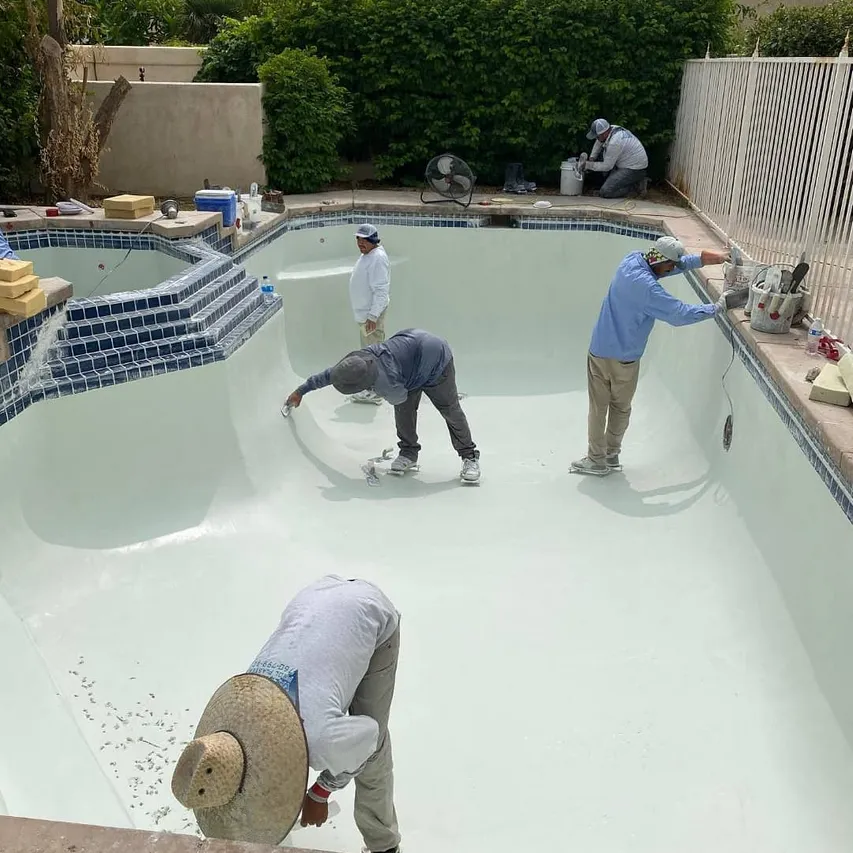
Step 2. Chip out the old finish, days one and two. The failed plaster comes off with pneumatic chipping hammers. It is loud and messy. Around steps, lights, main drains and returns we go by hand so nothing gets damaged. Every ounce of old material leaves your property.
Step 3. Prep and clean the shell, days two and three. The bare gunite gets washed and neutralized so the new material bonds. This is also when the shell tells the truth. Anything hiding under the old plaster is visible now, which is why crack work happens here and not later.
Step 4. Bond coat. A bonding layer goes over the prepared shell to give the new finish something to grip. Rushing this step is the number one reason a pool resurfacing job fails early. It costs a day and it buys years.
Step 5. Apply the new finish, application day. Plaster, quartz or pebble goes on in one continuous application, wall to wall. The crew moves fast because the material starts setting right away. Pebble gets an acid exposure wash afterward to open up the stone.
Step 6. Fill and start up. The hose goes in and does not come out until the pool is full. No stopping. Then startup care begins, and it matters more than most people expect.
Related work almost always happens between steps 3 and 5, while the pool is empty and access is easy: crack repair, waterline tile, and any pool remodeling you have been putting off.
Swimming pool resurfacing


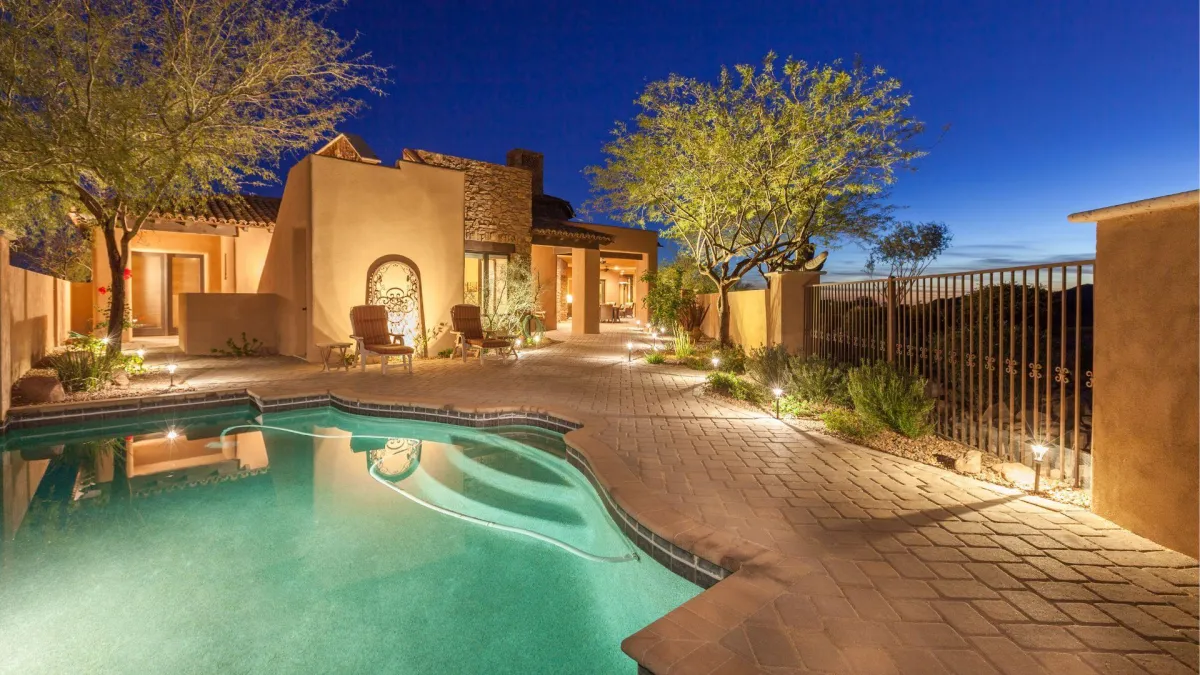
Swimming pool resurfacing is the core of this page, and pool replastering La Quinta homeowners can count on is work CV Pools has done since 1998. We chip out failed plaster, prep and bond the shell, and apply white plaster, quartz or mini pebble depending on what your water and your budget call for.
Most of the pools we resurface are 1980s and 1990s gunite shells that have been through one or two acid washes already. Those shells are usually sound. It is the surface that gave up, not the pool.
Estimates on pool resurfacing are free. You get a written scope listing the finish, the prep, what happens with the tile, and what is not included.
Swimming pool crack repair
An empty pool is the only time anyone can honestly evaluate a crack, which is why swimming pool crack repair belongs inside a pool resurfacing job instead of after it.
Two things look almost identical to a homeowner and are nothing alike. Surface crazing is a web of hairline lines in the finish only. It is cosmetic, it disappears under the new surface, and it is common on older shells. A structural crack goes through the gunite, often runs in one direction across the floor or up a wall, and can move water out of the pool.
We tell you which one you have before you spend anything. Structural work gets staples, sealing and proper prep before any finish goes on. Covering a live crack with new plaster just buys you a stain in the same line next spring.
Swimming pool tile repair
Do this right now: tap along your waterline tile with a knuckle. A solid tick means the tile is bonded. A hollow, drummy sound means water has already worked in behind the face, and swimming pool tile repair is on your list whether or not you resurface.
Calcium is the other half of the story. Our water leaves a white shelf along the tile line every year. Light scale usually blasts off and the tile looks new again. Heavy scale that has crept behind the grout has already done the damage.
The good news is timing. If the pool is already drained for pool resurfacing, tile work costs less than it ever will as a standalone visit.
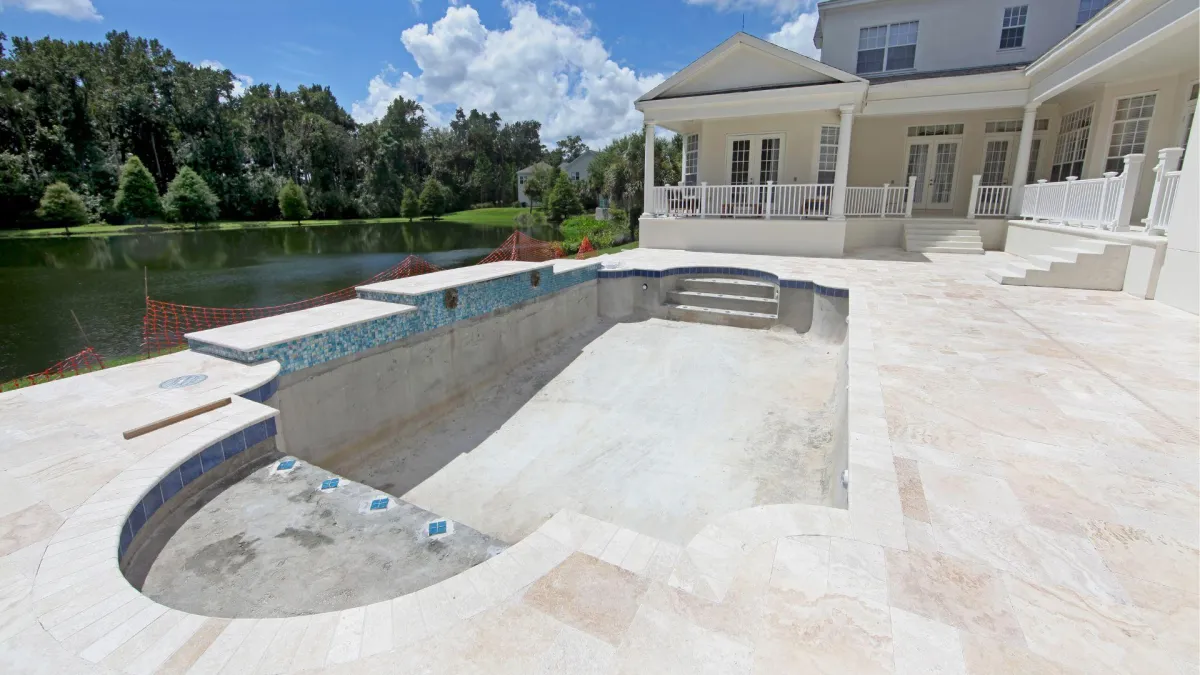
Tile replacement
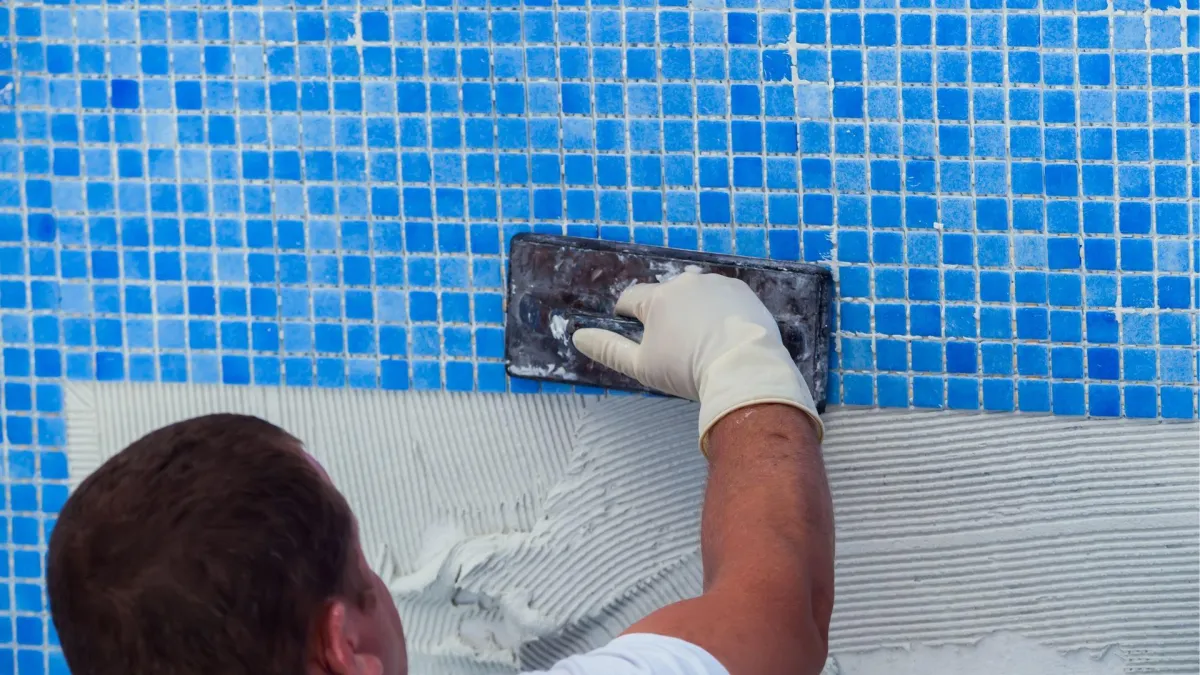
Tile replacement is the call when cleaning will not save it: hollow sections, popped pieces, cracked glaze, or a 1990s waterline band you have simply looked at long enough.
Almost every homeowner doing pool resurfacing ends up replacing the waterline tile at the same time, and the reason is practical. New finish against tired old tile makes the tile look worse than it did before. The contrast is unforgiving.
We remove the old run without damaging the bond beam, prep, set, grout and seal. On older La Quinta pools where the original tile is no longer made, we will show you what still matches the coping and what does not.
Swimming pool water analysis
A new surface will fail early in bad water. That is why swimming pool water analysis is part of pool resurfacing here and not an add-on service.
We measure chlorine, pH, alkalinity, calcium hardness, cyanuric acid and salt, then explain what those numbers do to a plaster surface in plain words. High calcium and a swinging pH are what turn a smooth finish into sandpaper in six years instead of twelve.
Desert sun also burns chlorine off fast, so pools out here carry a high chlorine demand, and owners overcorrect with acid without realizing what it does to the surface. Bring us a sample, or we will pull one at the pool.
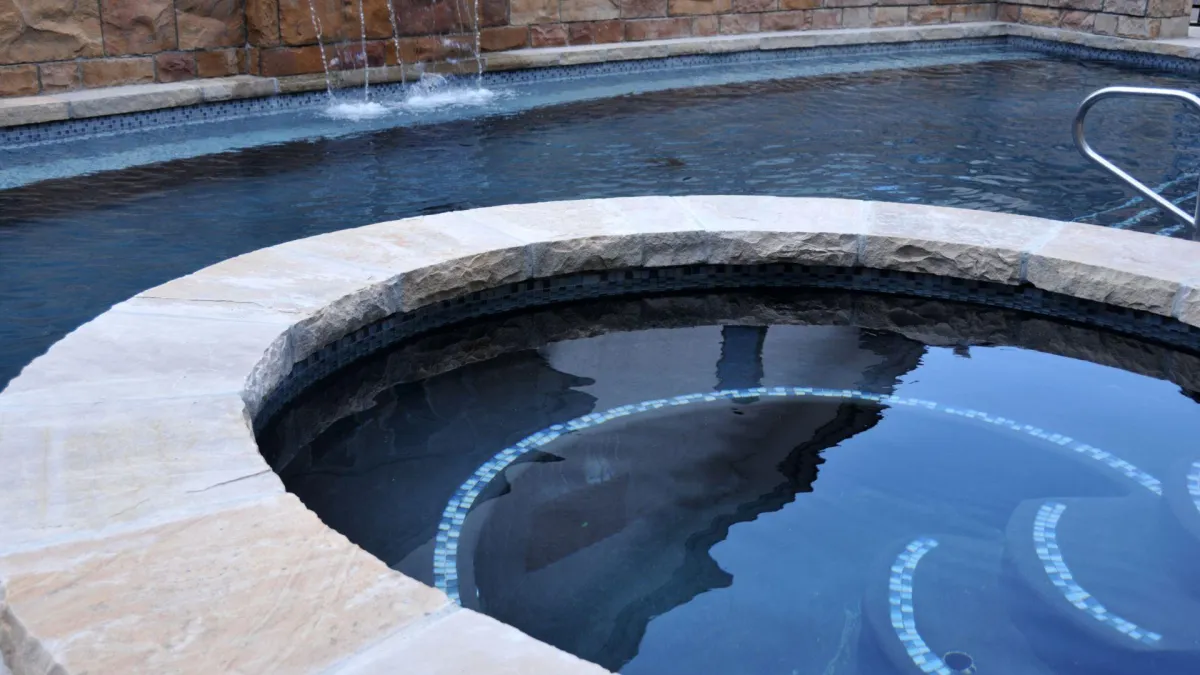
White plaster vs. quartz vs. pebble in hard desert water
The finish you pick is the single biggest pool resurfacing decision you will make. Our water is hard before it ever reaches your pool. Then the sun evaporates pure water off the top all summer and leaves the minerals behind, so the water gets harder as the season goes. That one fact drives every finish decision out here.
White plaster is the classic look. Bright, light blue water, lowest price of the three. It is also the softest and the most open to mineral etching, so in desert water it wears out sooner than aggregate finishes do. A fine choice for a rental or a budget that has to work right now.
Quartz is plaster with crushed quartz blended in. Quartz is harder than plain plaster and resists etching better, so it holds color longer, and it is smoother underfoot than pebble. It comes in blues, grays and tans, and it is our usual pick for families with young kids on the steps every day.
Pebble is small natural stones exposed at the surface. It is the longest lasting of the three in our water by a wide margin, because stone does not etch, and the water color is deep and natural. Texture is the trade-off: standard pebble is grippy, which some people love and some find rough on bare feet. Mini pebble softens that a lot.
The short version: for pool resurfacing in La Quinta, CA, aggregate finishes outlast plain white plaster, and the gap is wider than it would be on the coast. Staying in the house? Aggregate usually costs less per year even though it costs more on day one. Selling in two years? Plaster is not a bad call. We bring samples to your yard and hold them in daylight, because valley sun changes every color you saw indoors.
Resurface, or just repair?
Not every rough pool needs a full replastering. Plenty of the calls we take in La Quinta Cove turn out to be spot problems, and we say so before anyone drains anything.
It is probably a repair when one area is rough and the rest of the pool feels fine, because a worn strip below a return jet is usually chemistry aimed at one spot. Same story when a stain wipes away or lightens with a targeted treatment, when you have one crack in the plaster and the water level holds steady all week, or when a few tiles are loose but the finish under your feet is still smooth.
It is probably pool resurfacing when the whole shell feels rough, walls, deep end and steps. When chalk comes off on your hand anywhere you rub. When gray patches show where the finish wore through to the gunite, and those spots feel harder and colder than the rest. When stains come back within weeks of every acid wash, because a porous surface drinks minerals and holds them. When the finish has been acid washed twice already, since every wash removes material and there is only so much to give. And when your pool is a 1980s or 1990s gunite shell on original white plaster, because it has done its job.
Age helps, but the barefoot test beats the calendar. Two pools built the same year in Duna La Quinta can be years apart in surface life, purely from water chemistry. Our rule: three or more failing conditions across three or more areas, and pool resurfacing is the cheaper answer because patching is money spent twice. One area, one cause, one fix, and we repair it.
Refill, startup and the first month
The finish crew leaves and everybody relaxes. That is the wrong moment to relax, and it is the part of pool resurfacing nobody warns you about. The first month decides how long your new surface lasts.
The fill. Once the hose goes in, it stays in until the pool is full. A pause leaves a permanent ring where the water stopped. On a big La Quinta pool in July that is a long fill, so we plan it around your day.
No feet, nothing dumped in. Nobody swims. Nothing gets tossed in the water. The surface is still curing and it marks easily in those first days.
Brushing. Twice a day, the whole pool, for two weeks. This is the part homeowners skip and later regret. Brushing knocks loose plaster dust off before it settles and hardens into a rough patch. If you are away, someone has to do it.
Chemistry. New plaster raises pH on its own for weeks, and our desert water piles calcium on top of that. Startup water gets tested and adjusted often at first, not once a month. An unmanaged startup goes wrong quietly, and you do not feel the damage until year three.
Long term, keep calcium hardness and pH in range, brush weekly, and do not let the pool sit hot and neglected all August. That is the whole answer, and it is worth more than any product on a shelf. If you are a seasonal owner and the house sits empty, tell us up front. The startup plan changes completely when nobody is there to brush.
Serving La Quinta
CV Pools works out of 52115 Avenida Bermudas in La Quinta, CA 92253. Not a call center in another county. The shop is here, the trucks leave from here, and the pools we resurface are the ones we drive past. Local pool resurfacing, done by people who live here.
We handle pool resurfacing and pool replastering La Quinta homeowners call for across the city: La Quinta Cove, Duna La Quinta, Mountain View Country Club and Laguna de la Paz, plus the rest of the city.
Each of those areas brings its own wrinkle. Cove pools tend to be older, smaller gunite shells on original plaster, and they make up a good share of our pool resurfacing work. Duna La Quinta and Laguna de la Paz have HOA rules about work hours, staging and where a chipping truck can park, and we work inside them. Mountain View Country Club owners usually want finish color matched to existing stone and coping, which means samples in daylight, not a catalog.
Family owned and working in this valley since 1998. Open Monday through Friday, 8:00 AM to 5:00 PM. Call (760) 619-2409 for a free written estimate on pool resurfacing.
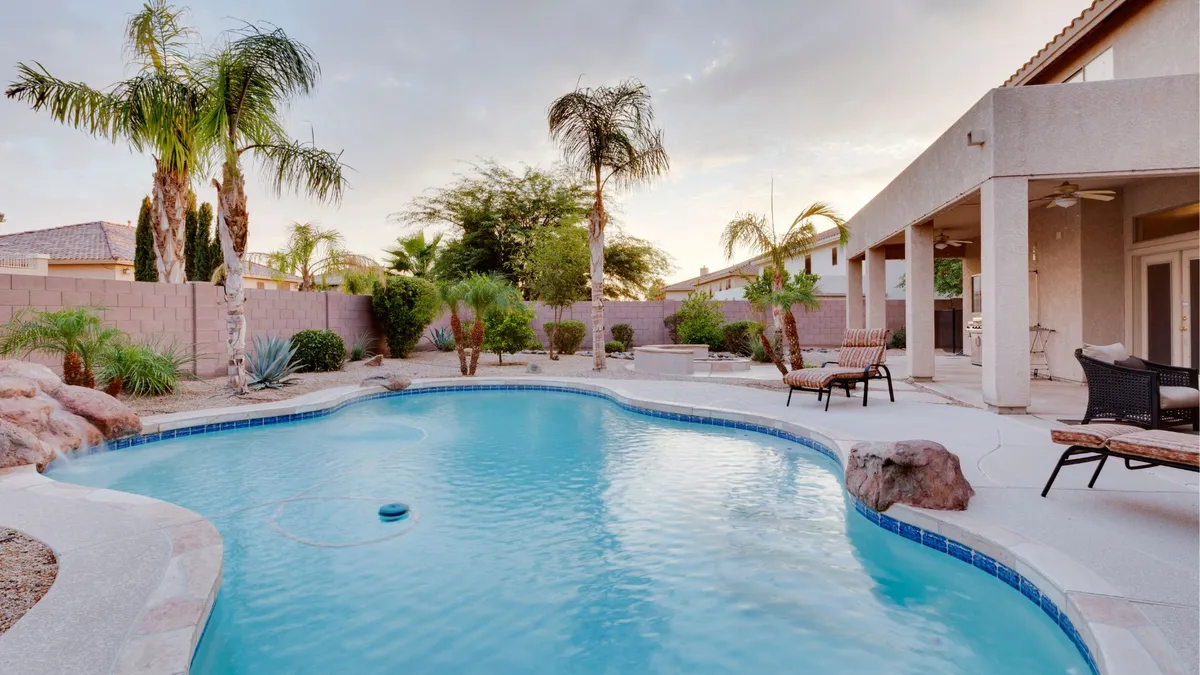
Transform Your Backyard into a Stunning Oasis with Our
Pool Repair and Construction Services
Revitalize your outdoor space with expert repairs that make your pool look brand new.
You deserve peace of mind knowing your pool repairs are handled by trusted experts.
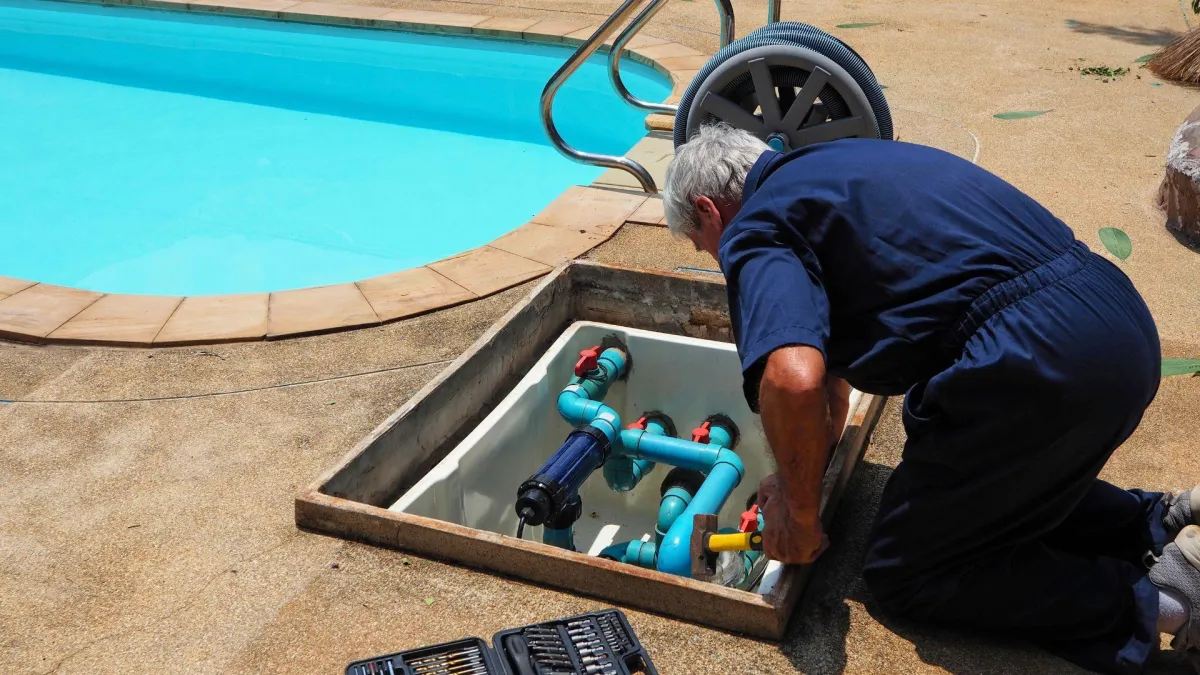
Pool Equipment Check-Up 1 year maintenance Check-Up package to ensure long-term satisfaction.
Pool resurfacing in La Quinta, CA: questions we get every week
How do I know it's time to resurface my pool?
Do the barefoot test. Walk the shallow steps with no shoes. If the surface feels like sandpaper, your hand comes up chalky white after rubbing the wall, your swimsuit snags, or gray shell shows through in patches, the finish is done. One rough spot is a repair. Rough everywhere is resurfacing.
How often do desert pools need resurfacing?
More often than coastal pools. Hard mineral-heavy water, high chlorine demand under desert sun and heat swings all shorten the life of an interior finish. White plaster goes first, aggregate finishes last longest. Your water chemistry matters more than the calendar.
What does pool resurfacing cost in La Quinta?
Price depends on pool size, the finish you choose, and whether tile and coping are replaced at the same time. White plaster is the lowest, quartz sits in the middle, pebble is highest and lasts longest here. Estimates are free and written.
How long is the pool empty?
Most La Quinta pools are out of service about one to two weeks from drain day to swimming. Chip-out is the first couple of days, prep and bond coat follow, the finish goes on in a single day, then fill and startup. Extra tile, crack or coping work adds time.
Can you just patch the rough spots instead?
Sometimes, yes. If one area is rough and everything else is smooth, we patch it and you keep swimming. But a patch never blends invisibly, and if three or more areas are failing, patching costs you twice. We tell you honestly which situation you have before any money changes hands.
Pebble or plaster in our water?
In hard La Quinta water, pebble outlasts white plaster by a wide margin because the stone does not etch the way plaster does. Quartz sits between them and feels smoother underfoot. If you are staying in the house, aggregate usually costs less per year. If you are selling soon, plaster is fine.
Will you replace the tile at the same time?
Almost always the right move. The pool is already drained, so access is free and the labor is cheaper than a standalone tile visit. New finish also makes old waterline tile look worse by contrast. Tap your tile first: a hollow sound means it needs replacing regardless.
What is startup care and why does it matter?
Startup is the first month after the fill. Brush the whole pool twice a day for two weeks, keep everyone out of the water at first, and test chemistry often because new plaster pushes pH up. Skipping startup brushing leaves rough patches you will feel for years.
Will the color match what I picked from the sample?
Close, but not exact, and that is true of every plaster product from every company. These are hand-applied mineral finishes, so color varies slightly with water depth, sunlight and cure. Water also darkens the shade. We show samples outdoors in valley light so the surprise is small.
Can you do it while we're away for the summer?
Yes, and a lot of La Quinta owners do exactly that. Tell us before we schedule, because an unattended startup needs a different plan. Someone has to brush the pool twice daily for two weeks and manage chemistry. We arrange that as part of the job rather than leaving it to chance.
Facebook
Instagram
LinkedIn
Youtube