
Licensed & Insured · Since 1998

Pool Plumbing Repair in La Quinta: Finding the Broken Pipe Before Anybody Breaks the Deck

Proven Excellence
Our Passion is Transforming Your Backyard Vision into a Stunning Reality!
Next Door Neighborhood Favorite
Google and Yelp Reviews Below:
Why is my pool filter pressure high?
Most pool plumbing repair La Quinta calls do not start at the pool. They start with a wet spot in the yard. Somebody walks out barefoot on a Saturday morning and finds a patch of decomposed granite, twenty or thirty feet from the water, dark and soft. Nothing is planted there. No sprinkler runs there. Everything around it is bone dry. In a place where the ground gives up moisture in a few hours, damp dirt is loud.
Here is the part almost nobody knows. Water under the ground does not travel in a straight line. It follows the trench that was dug for the pipe when the pool was built. It runs sideways along the gravel bed under the deck. Then it comes up wherever it finds the easiest way out. So that wet spot marks where the water came up, not where it came out of the pipe. Those two places can be far apart.
The same signal shows up in other shapes. A strip of deck still warm to bare feet late in the evening after the rest has cooled. A joint in the concrete that stays dark all day. One shrub greener than anything around it. A corner of decking that has settled lower than it used to sit.
None of that tells you which pipe. Digging up a deck to look is the most expensive way to find out. That is why real work starts with a pressure test.
How do you find and fix a broken pool pipe?
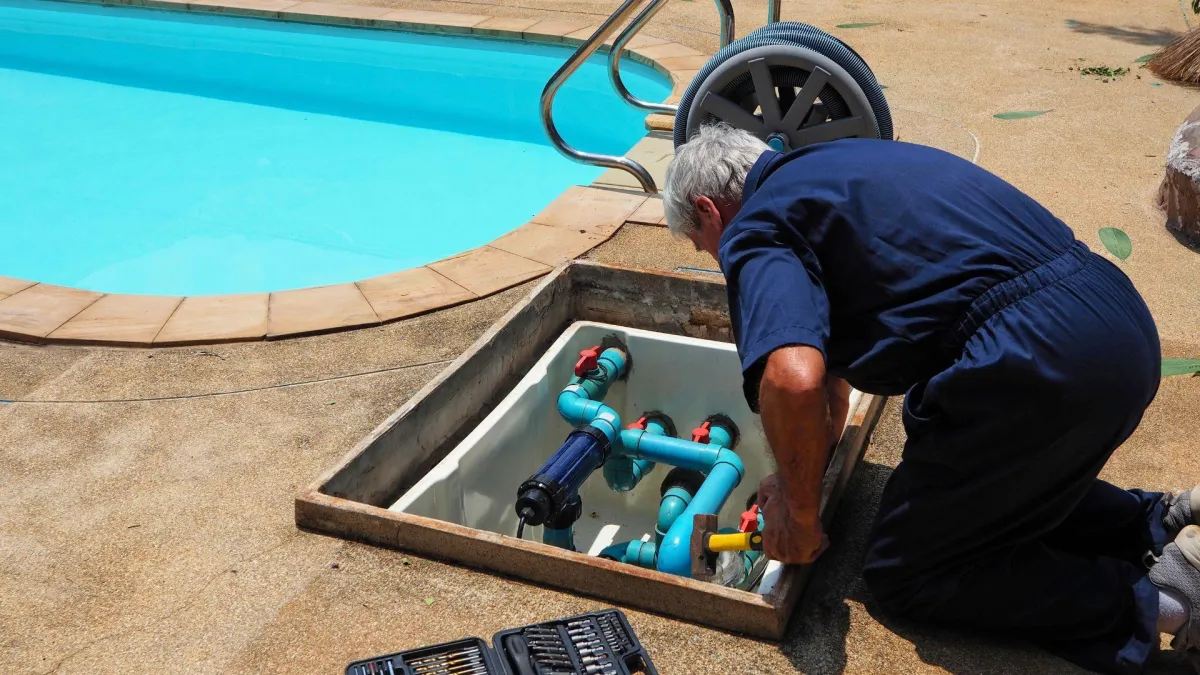
A tech isolates each pool line at the equipment pad, plugs it, and pressurizes it with air or water. The line that will not hold pressure is the broken one. Listening gear tracks the escaping air to a small spot. The dig or deck cut happens only over that spot, the bad section comes out, new pipe and fittings go in, and the line is pressure tested again before anything gets patched.
Suction side and return side: why the symptoms look nothing alike
Suction lines pull water toward the pump. Those are the skimmer line and the main drain line, and they are under vacuum when the pump runs. So a hole in a suction line does not push water into the yard. It pulls air in. That is why a pool suction line leak shows up as bubbles blowing out of the returns, a pump that will not hold prime, and a swirl of air in the strainer basket. There may be no puddle anywhere.
Return lines are the other half. They push filtered water back into the pool under pressure. A pool return line leak loses real water, and loses more the harder the pump pushes.
One simple test separates the two, and any homeowner can run it. Turn the equipment off for a day and watch the level. If the loss slows or stops, the trouble is on the pressure side. If the level keeps dropping either way, look at the shell, the light niche, or a suction line.
What actually breaks in La Quinta pool plumbing
PVC that has baked in 115 degree summers for thirty years gets brittle. It stops flexing and starts cracking. Glue joints come next, and this surprises people: underground pool pipe repair almost never means a split down the middle of a pipe. It means a fitting that let go. The joint at an elbow or a tee is the weak point, not the straight run.
Ground movement pulls fittings apart over years. Roots from a mature ficus or oleander wrap a line and squeeze it. A line gets crushed during a landscaping job or a deck pour, and may not fail for another five years. Older pools have metal fittings threaded into PVC, and those corrode from the inside until they weep. Valves seize from calcium or leak at the stem. A check valve sticks part way open and quietly cuts flow to half the pool.
The most common failure point is not underground at all. It is the equipment pad, where all the joints are, all the sun, and all the vibration from a pump running most of the day. Always look there first.
Swimming pool general plumbing repairs in La Quinta



Most PVC pool plumbing work falls into a handful of jobs. Cutting out a cracked section and gluing in a new piece. Replacing a failed tee or elbow. Rebuilding part of the pad so the pipe runs cleanly instead of through five extra bends. Pool pipe repair at a skimmer throat. Replacing a return eyeball broken off inside the wall. Pool valve repair, which means a new diverter and O-ring kit, or a full swap when the body is cracked.
New PVC is glued with primer and solvent cement, and needs cure time before it sees pressure. A tech who fires the pump ten minutes after gluing is setting up the next callback.
Pipe size and flow are not just details
California standards limit how fast water may move in pool piping, with tighter limits on the suction side. That is why pipe diameter matters, why sweep elbows beat sharp ones, and why a straight run into the pump inlet matters. A cheap repair with the wrong fitting costs a homeowner in pump efficiency and noise for years. Main drain and suction outlet safety requirements also apply and are not optional.

Swimming pool leak detection & repairs
Pressure testing is simple in concept. Each line gets isolated at the pad, plugged at the pool end, and filled with air or water under controlled pressure. A tech watches the gauge. A line that holds is fine. A line that drops is the one. Doing them one at a time makes a targeted repair possible instead of tearing out a deck on a guess.
From there, listening equipment narrows it further. Air pushed through a broken line makes a sound under the ground, and a ground microphone walks it down to a small area. Sometimes a pipe locator traces the run first.
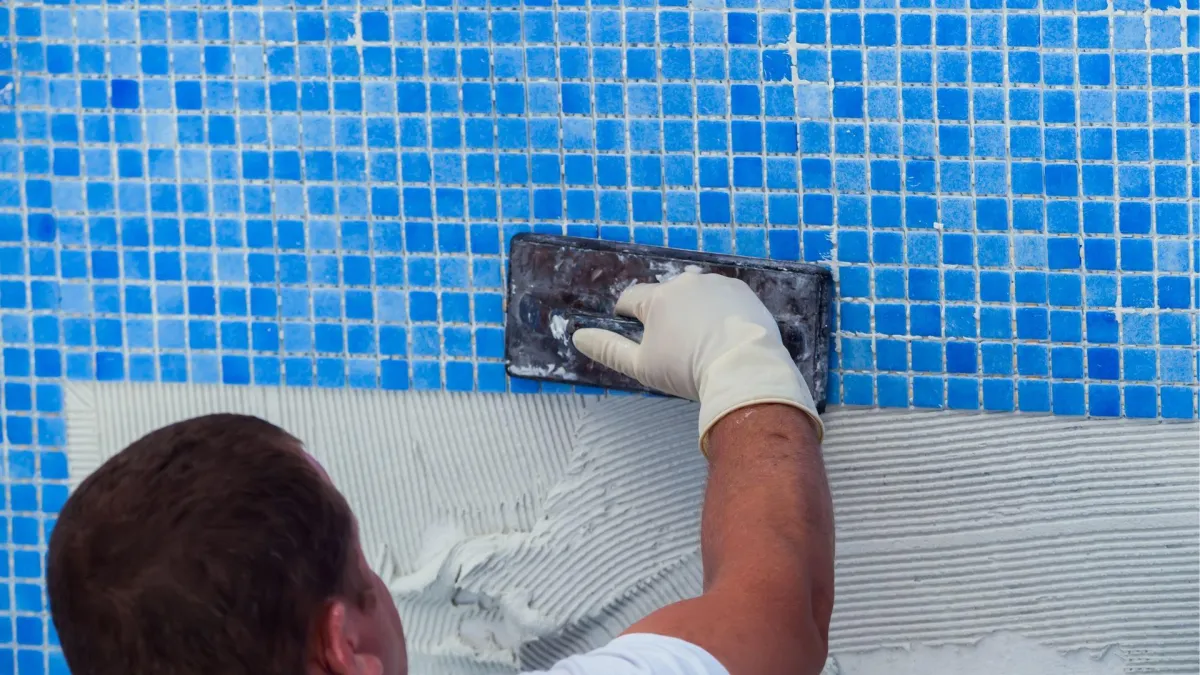
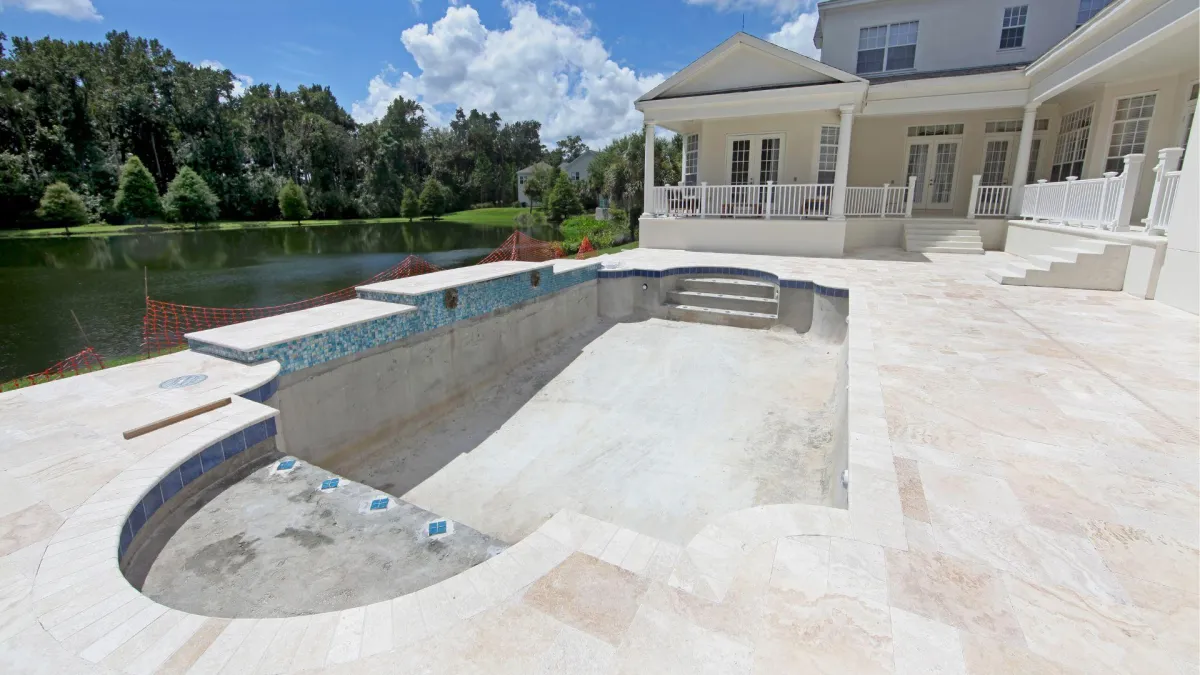
The honest part: some repairs do mean opening decking. There is no way around a break under four inches of concrete. The goal is the smallest opening that works, cut clean so the patch looks intentional. If deck has to come out anyway, that is worth a talk with concrete deck work in La Quinta first. Full pool leak detection in La Quinta is its own service if the source is unknown.
Swimming pool equipment repair
A leaking pad is not always a pipe. A filter head O-ring, a heater bypass, a chlorinator lid, a salt cell union, or a cracked filter tank will all put water on the concrete and look like a plumbing failure. Same in reverse: air pulled in through a bad suction line makes a filter read low pressure and a heater cut out on flow, and a homeowner buys a heater part they never needed. Brands worked on include Pentair, Hayward, Jandy, Raypak, Sta-Rite and Intermatic. More on pool equipment repair in La Quinta and pool filter repair in La Quinta.
Pump repairs & installation
A pump that will not hold prime is the classic case. Half the time it is the pump: a dried lid O-ring, a cracked strainer pot, a worn shaft seal. The other half it is the suction line, and no new pump fixes that. Anybody who replaced a pump and still has bubbles at the returns has a plumbing problem.
When a pump is genuinely done, that is the moment to correct bad plumbing too, since the pad is open. Variable speed swaps and repiping live on the pool pump repair in La Quinta page.
Swimming pool auto water fill repair
An autofill is a float valve in a small box near the pool edge, plumbed to the house water line. When the level drops, it opens and tops the pool off. Useful, especially for second home and vacation rental owners who are gone half the year.
Here is the trap. A fill valve stuck open masks a real leak completely. The pool loses water into the ground all day, the autofill quietly replaces it, and the level never drops. No puddle, no low water, no clue. The only evidence is the water bill, which is why a bill that doubled with no change in habits is worth a phone call.
The opposite happens too. A fill valve stuck closed or plugged with calcium stops filling. Now normal summer evaporation, roughly a quarter inch a day out here, drops the level fast, and the owner is sure they have a leak when the plumbing is fine. Testing the autofill early keeps people from paying to chase a leak that does not exist.
General repairs
Replacing cracked unions and pad fittings. Resetting a skimmer separated from its throat. Swapping brittle flex hose for rigid pipe. Adding a union at the heater so the next service does not require cutting. Replacing a missing main drain cover. Re-plumbing a pad that grew one piece at a time over twenty years and has more elbows than it needs.
If several of these are stacking up, handle them together instead of one truck roll at a time. The full menu is on the swimming pool repair service in La Quinta page.
When rerouting a line beats repairing it in place
On an older pool with brittle pipe under a nice deck, chasing one break can turn into a losing game. The first repair holds. Four months later the pipe fails eighteen inches away, because the whole run is the same age and condition. Now there are two patches in the deck and the same problem.
Rerouting means abandoning the old line in place and running new pipe on a different path, usually around the deck through a planter or along the equipment side of the house. It costs more up front. It ends the cycle.
Repair in place makes sense when the pipe is healthy, the break came from a one-time cause like a root or a shovel, and access is easy. Rerouting makes sense when the pipe is decades old, when the same line has already been repaired, or when the break sits under something expensive like a raised bond beam or new pavers.
Book pool plumbing repair in La Quinta
A diagnostic visit is $150, credited toward the approved repair. The visit covers isolating and pressure testing the lines, checking the pad, and telling a homeowner plainly what broke and what the fix costs before anybody picks up a saw.
CV Pools has repaired pools in the valley since 1998, and holds CSLB License 994121. Hours are Monday through Friday, 8:00 AM to 5:00 PM. Call (760) 619-2409, or use the contact page for CV Pools in La Quinta. The rest of the list is on the swimming pool services in La Quinta page.
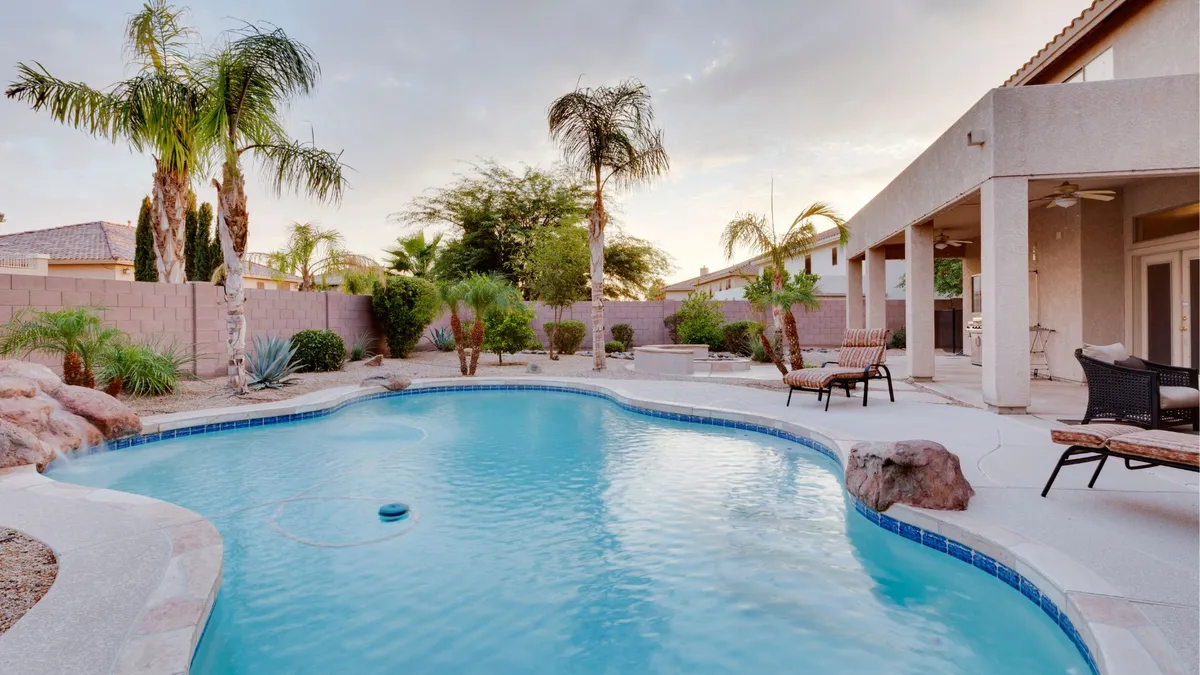
Transform Your Backyard into a Stunning Oasis with Our
Pool Repair and Construction Services
Revitalize your outdoor space with expert repairs that make your pool look brand new.
You deserve peace of mind knowing your pool repairs are handled by trusted experts.
Pool Equipment Check-Up 1 year maintenance Check-Up package to ensure long-term satisfaction.
Questions People Actually Ask
Do you have to break my deck to fix a pool pipe?
Not blindly. Lines get pressure tested one at a time first, so the break is located to a small area. If the pipe runs under concrete a cut may be needed, but it is sized to the repair, not the search. Many breaks are at the pad.
How do you find the leak without digging up the whole yard?
Each line is plugged and pressurized on its own. The one that will not hold pressure is the bad one. A ground microphone then listens for air escaping underground and walks it down to a few feet. Digging happens only there.
There are bubbles coming out of the return jets. What does that mean?
Air is getting in on the suction side, between the pool and the pump. That is a pump lid O-ring, a loose union, or a hole in the skimmer or main drain line. It is not the returns failing.
My pump won't hold prime. Is that plumbing or the pump?
Either, and both get checked. Pump side means a dried lid gasket, a cracked strainer pot, or a bad shaft seal. Plumbing side means a suction line pulling air. Replacing a pump when the suction line is the real problem buys the same symptom twice.
There's a wet spot in my yard far away from the pool. Is that the pool?
It might be. Water follows the trench the pipe was laid in and surfaces wherever the ground lets it, sometimes many feet from the break. A damp patch in dry decomposed granite, with no sprinkler near it, is worth a test.
How long does a pool plumbing repair take?
Most standard repairs finish in one visit once the line is located. Testing and locating takes a couple of hours. Glued PVC needs cure time before the pump runs. Deck cutting or a reroute can stretch the job across two days.
Can you just repair it, or does the whole line need replacing?
Depends on the pipe. A one-time break from a root or a shovel, in sound pipe, gets patched. Decades-old brittle PVC that has already failed once tends to fail again nearby. A new line on a different path costs more once and stops the cycle.
Does the pool have to be drained to fix the plumbing?
Almost never. Most pool pipe repair happens on the line side, not in the shell, so the water stays in. Draining a pool out here carries its own risk with ground water and shell movement.
My water bill jumped and the pool level looks normal. What's going on?
Check the autofill first. A fill valve stuck open replaces every gallon a leak loses, so the level stays perfect while water runs into the ground all day. The bill is the only symptom. That is a common call here: a real leak, with a working autofill hiding it.
Can a slow leak under the deck damage anything?
Over time, yes. Water moving through soil under a deck washes out fine material and leaves voids. That shows up as a settled or cracked slab, and near the house it can affect soil under a footing.
Facebook
Instagram
LinkedIn
Youtube