
Licensed & Insured · Since 1998

Salt System Repair La Quinta, CA: When The Panel Says Low Salt And The Salt Is Fine

Proven Excellence
Our Passion is Transforming Your Backyard Vision into a Stunning Reality!
Next Door Neighborhood Favorite
Google and Yelp Reviews Below:
Getting your pool light fixed
Do the math on desert swimming. From May through September, nobody in La Quinta gets in the water at two in the afternoon. The deck is too hot to stand on. The good swimming starts when the sun drops behind the Santa Rosas. That is the half of the year you actually paid for. And pool light repair La Quinta families ask about almost always starts the same way: the light went out in April, and by July the pool has quietly become a daytime-only pool.
Almost nobody calls right away. A dark pool feels cosmetic. It also feels a little scary, because anything electrical sitting in water sounds expensive. So it goes on the someday list.
Flip that around. A dark pool is a safety problem before it is a looks problem. You cannot see the bottom. You cannot see where the step ends. You cannot count heads when there are four kids in the water and one of them is under it.
The fix is usually smaller than the fear. One rule: do not open it yourself, and do not let a handyman do it. The real question is which of four things broke — the lamp, the fixture, the wiring, or the bonding.
Why is my pool light not working?
A pool light stops working for one of four reasons: the lamp burned out, the fixture flooded through a bad lens gasket, the wire run to the junction box failed, or ground-fault protection cut the power. A burned-out lamp is the cheapest fix. Water inside the fixture is the most urgent. Only a licensed tech should open the niche.
With the power off and the light on the deck, the diagnosis walks in order. Skipping steps is how people fix the wrong thing twice.
Four things beat up pool lights here, and none of them are in the manual.
Heat cycling. The pool hits the high eighties in August while the air above it clears 115. That daily swing hardens the lens gasket over years. A hardened gasket stops sealing. Water gets in.
Water chemistry and salt. Salt systems are common in the valley, and salt is patient. It works on the stainless face ring and the screws until things pit and seize. On a fixture nobody has opened in a decade, the screws are often the hard part of the job.
Calcium over the lens. Hard water is the desert tax. Scale builds a haze across the glass and the light dims for a year before it ever dies. People assume the bulb is going. Often the bulb is fine and the lens is frosted.
Running dry. This is the fast killer. During a drain-down, a fixture left energized with no water around it cooks in minutes. Incandescent lamps use the pool water as their heat sink. Drop the water below the niche with the light on and the fixture can be gone before lunch.
Swimming pool light repair



Layer one: the lamp. The bulb itself. On older La Quinta pools this is a big incandescent lamp, 300 or 500 watts, in a sealed housing. Lamps die. If the housing is dry inside and everything else tests clean, this is a lamp swap and nothing more.
Layer two: the fixture and its lens gasket. Look at the lens from the deck. Is it fogged? Is there a waterline halfway up the glass? That is not condensation. It means the gasket has hardened and the fixture is taking on pool water. A flooded fixture kills lamp after lamp, which is why some homeowners have replaced three bulbs in two years.
Layer three: the wiring in the conduit run. Every fixture has a long cord running through conduit from the niche up to a junction box near the deck. That cord can chafe, corrode at the terminations, or get pinched. If the lamp is good and the fixture is dry but no power reaches the socket, the run is the suspect.
Layer four: bonding and ground-fault protection. If the GFCI trips the instant you flip the switch, that is not a fussy breaker. It is telling you current is finding a path it should not have — usually water inside the fixture, or a damaged conductor. That is specific, useful information. A trip that comes hours later points somewhere else, often moisture in the junction box.
Good pool light repair La Quinta work means testing all four before anybody quotes a number.
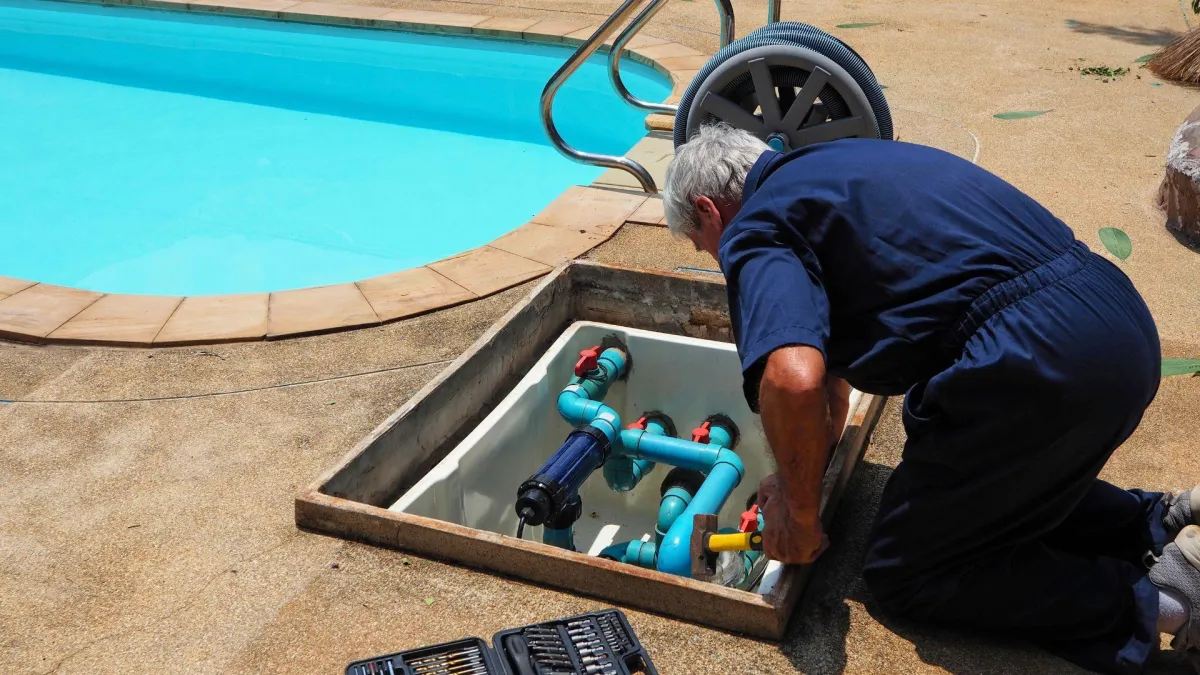
Electrical repair
Pool lighting, bonding, and ground-fault protection are covered under California Electrical Code Article 680, the section written for water and electricity in the same backyard. It exists because the failure mode here is not an inconvenience.
Three plain rules.
Never pull a fixture out of the niche while anyone is in the water. Not a toe, not a kid on the step. Everyone out and dry first, breaker off before anything moves.
Do not let a handyman do this. A handyman can hang a ceiling fan and be great at it. Pool electrical work is a different license and a different rule set — bonding grid, low-voltage requirements, GFCI protection, and where the junction box has to sit relative to the water.
A fixture that trips a breaker is not a nuisance to be reset. If you are walking out to the panel every night to push a breaker back on, stop. That breaker is a safety device working correctly. Resetting it over and over is the pool version of taping over a smoke alarm.
This is licensed work. That is the whole message.
LED pool light conversion: what you really get
Salt water is a little harder on some parts than plain water. Not dramatic. Not a reason to rip the system out. Just real over ten or fifteen years.
The parts that notice are metal ones sitting in or near the water. Heater heat exchangers. Screws and rings on pool lights. Handrail anchors. Raw fittings at the pad. Some stone coping picks up a white bloom near the waterline, mostly where splash-out dries fast in summer heat.
A sacrificial anode is worth asking about. It is a small block of zinc that corrodes on purpose so the other metal does not. Cheap part, easy to add.
That is the honest version. Salt is not eating your pool. Balanced water and one small zinc block handle most of it. Anyone telling you a salt pool destroys plaster is selling something. Anyone telling you salt has zero effect has not opened a fifteen-year-old heater. Most salt system repair La Quinta visits end up touching one of these parts too.
Board and wiring problems are their own animal, and they are not a homeowner job.
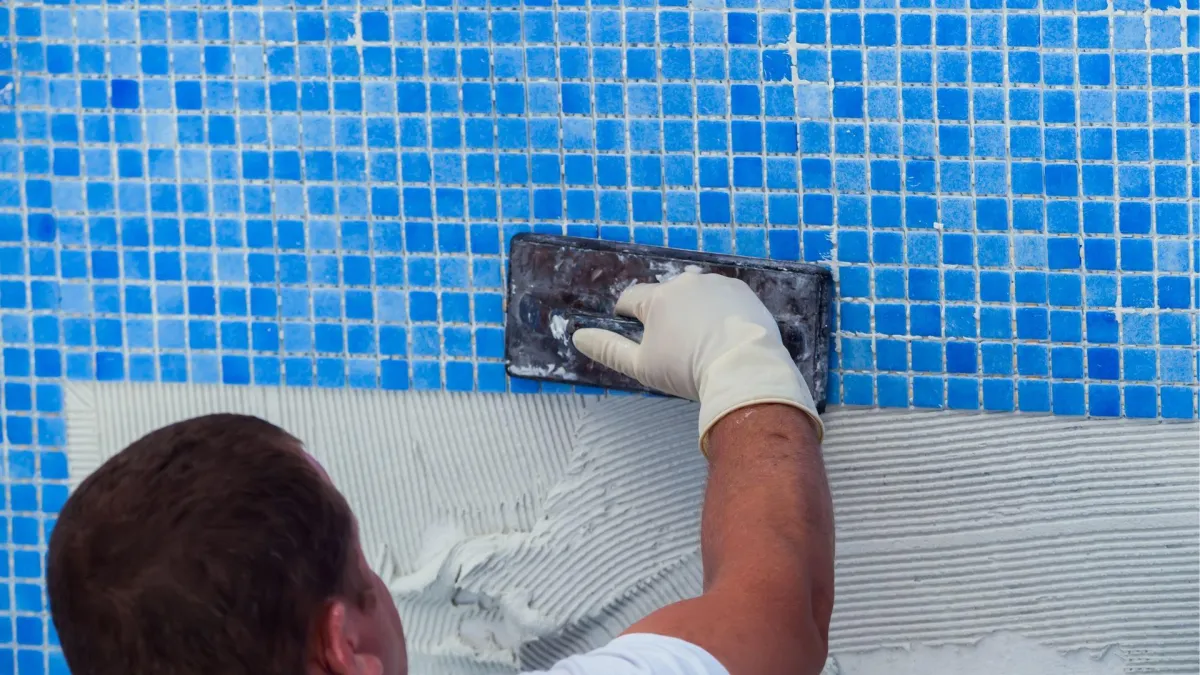
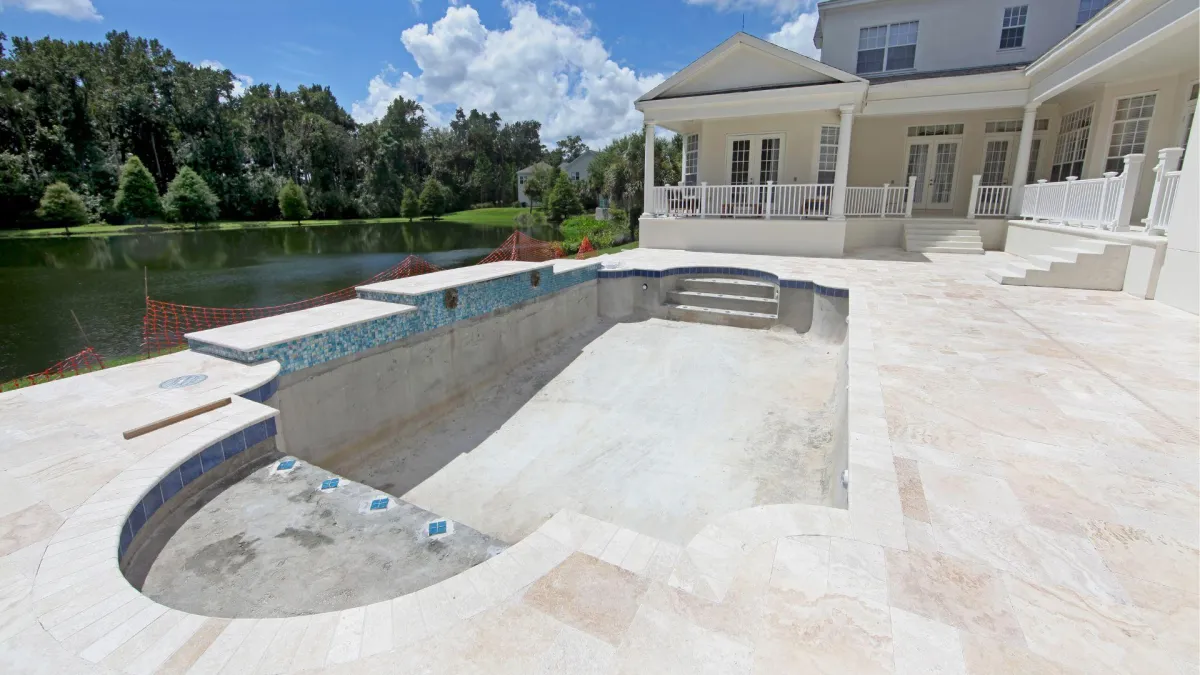
Swimming pool equipment repair
A pool light does not live alone. It runs through a transformer on low-voltage systems, through a timer or automation panel, and off a GFCI-protected circuit at the pad. When the light stops, the fault is sometimes not the light at all.
Common ones out here: a time clock that drifted until the light comes on at midnight, a failed transformer that leaves the fixture dead but the breaker happy, a relay that clicks but passes no power, and blow-sand packed into a cabinet until the contacts stop making clean contact. Monsoon wind in July and August does that last one to half the pads in the valley.
That is why the light check ends at the pad, not at the niche. Same visit. If the timer is the problem, you have a timer problem, and you should not be paying for a fixture.
If the pad turns out to be the bigger story, that is pool equipment repair in La Quinta, and automation gets its own path at pool automation repair.
General repairs
The niche is the metal or plastic cup set into the pool wall that the fixture sits in. The conduit is the pipe carrying the cord from that cup to the junction box. When those fail, the job changes shape.
A cracked or corroded niche means water is getting behind the shell, not just into the fixture. On older pools with metal niches plenty of them along the Avenue 48 corridor — the niche corrodes from the back side where nobody sees it. Replacing one means opening the pool wall, setting the new niche, and patching the shell.
A failed conduit run is the other one. If the pipe is crushed, separated at a joint, or full of water, you cannot pull a new cord through it, and no fixture on earth fixes that.
Both are wet jobs that touch plaster. That is why niche and conduit work often gets scheduled alongside a resurfacing the pool is already drained and you are not paying twice for the same drain-down. If a replaster is anywhere in your next two years, ask about it.
Swimming pool renovations
The cheapest time to fix pool lighting is during work you were already doing. When a pool is drained for pool resurfacing and replastering in La Quinta, the niche is reachable and the conduit can be tested properly. Adding a light while the water is out is a small line item. Doing it later on its own means draining again.
The same holds for a remodel. If you are already changing tile, coping, and deck, that is the moment to add a second light to a dark deep end or bring color LED into a pool built before color was an option. That work lives at pool remodeling in La Quinta.
Spas get the same treatment. A spa light runs on its own circuit and its own small fixture, which is why a spa goes dark while the pool stays lit. If the spa shell or jets are also on the list, look at spa repair and construction so one crew handles all of it.
Why fixtures fail early in the desert
Four things beat up pool lights here, and none of them are in the manual.
Heat cycling. The pool hits the high eighties in August while the air above it clears 115. That daily swing hardens the lens gasket over years. A hardened gasket stops sealing. Water gets in.
Water chemistry and salt. Salt systems are common in the valley, and salt is patient. It works on the stainless face ring and the screws until things pit and seize. On a fixture nobody has opened in a decade, the screws are often the hard part of the job.
Calcium over the lens. Hard water is the desert tax. Scale builds a haze across the glass and the light dims for a year before it ever dies. People assume the bulb is going. Often the bulb is fine and the lens is frosted.
Running dry. This is the fast killer. During a drain-down, a fixture left energized with no water around it cooks in minutes. Incandescent lamps use the pool water as their heat sink. Drop the water below the niche with the light on and the fixture can be gone before lunch.
Getting your pool light fixed
Most pool light repair La Quinta jobs start the same way: a diagnostic visit, $150, credited toward the approved repair. It covers the four layers — lamp, fixture, wire run, bonding and ground-fault protection — so you get an answer instead of a guess. If it is a lamp, you hear that. If it is a niche, you hear that too, along with whether to wait for a re plaster.
CV Pools has worked on La Quinta pools since 1998. Hours are Monday through Friday, 6:00 AM to 9:00 PM. The number is (760) 619-2409, and the office is at 52115 Avenida Bermudas, La Quinta, CA 92253. License information is 994121.
Start at contact CV Pools in La Quinta, or read the full swimming pool repair service in La Quinta menu and the broader swimming pool services in La Quinta list. For anything past the light itself, pool electrical repair in La Quinta is the next stop.
Transform Your Backyard into a Stunning Oasis with Our
Pool Repair and Construction Services
Revitalize your outdoor space with expert repairs that make your pool look brand new.
You deserve peace of mind knowing your pool repairs are handled by trusted experts.
Pool Equipment Check-Up 1 year maintenance Check-Up package to ensure long-term satisfaction.
Questions People Actually Ask
Can I just change the pool light bulb myself?
No, and that answer is firm. Getting to the lamp means pulling a fixture out of a niche underwater, opening a sealed housing, and re-gasketing it correctly. Done wrong, the fixture floods and the circuit becomes a hazard. Pool light bulb replacement is licensed work
Why does my breaker trip the second I turn the pool light on?
That instant trip is a specific signal. It means current is leaking where it should not — most often water inside the fixture or a damaged conductor in the conduit run. The ground-fault device is doing its job. Leave the breaker off and have it tested before anyone swims
Is it safe to swim with a broken pool light?
If the breaker is off and stays off, swimming is generally fine, but you lose visibility at night. If the light trips a breaker, flickers, or the lens has water in it, keep people out until it is checked. Never swim while a fixture is out of its niche.
Does the pool have to be drained to replace a light?
Usually no. Most pool light replacement happens with the water still in the pool, by pulling the fixture onto the deck on its cord. Draining only matters when the niche or the conduit run has to be replaced, which means opening the pool wall.
How long does an LED pool light last?
LED pool lights are rated in the tens of thousands of hours, against hundreds for an old incandescent lamp. For a pool lit most summer evenings, that is many years rather than a yearly bulb. Heat and a failing gasket shorten it, so the seal matters as much as the lamp.
Can I get color lights in an older pool?
Yes, in most cases. An LED pool light conversion can often go into the existing niche using the existing conduit, so you get color without touching plaster or deck. Exceptions: a cracked niche, a crushed conduit run, or an old junction box.
Why does my pool light look dim or yellow?
Two usual causes. Calcium scale from hard desert water hazes the lens and cuts light output, and an aging incandescent lamp yellows near the end. Cleaning the lens tells you which. If the glass is clear and it is still dim, the lamp is going out.
There is water inside the light lens. Is that bad?
Yes. A fogged lens or a waterline inside the housing means the gasket failed and the fixture is taking on pool water. That is what kills lamp after lamp and trips ground-fault devices. Turn the circuit off rather than replacing another bulb.
My spa light is out but the pool light works fine. Why?
Spa lights run on a separate circuit, transformer, or channel of the automation panel, and use a smaller fixture. One fails while the other is untouched. Spa light repair follows the same four-layer check lamp, gasket, wire run, then bonding and ground-fault protection.
Can I run the pool light from my phone?
Usually yes, if the pool has an automation system or one gets added. The light ties into a controller, and scheduling and color scenes move to an app. Older pools on a time clock need that panel changed first.
Facebook
Instagram
LinkedIn
Youtube