
Licensed & Insured · Since 1998

Pool Crack Repair in La Quinta: How to Tell a Hairline From a Real Problem

Proven Excellence
Our Passion is Transforming Your Backyard Vision into a Stunning Reality!
Next Door Neighborhood Favorite
Google and Yelp Reviews Below:
Why is my pool filter pressure high?
Before you call anybody about pool crack repair La Quinta homeowners can do one thing almost nobody does. Look at the crack twice, from two places. The two views tell you different things, and the difference between them is most of the diagnosis.
Here is the view you already had. You stood on the deck at noon, squinted through the glare, and decided. That view lies. Sun and ripple make a harmless hairline look like a canyon and hide a real crack in the shadow of the tile.
Now take the second look. Put on a swim mask, get in, and put your face six inches from the line. Up close you can see whether the line has real width, and whether it runs as one clean line or spreads like a spider web.
Three things to check and write down
Does your fingernail catch on it? A lip you can feel is different from a line you can only see.
Does it cross the tile line? If it keeps going past the waterline tile, that matters.
Does it run at an angle out of a corner or a step? A diagonal off a corner is a pattern, not an accident.
You cannot conclude anything final from this, and you should not try. But those three answers change what a visit costs and what the tech looks for.
Cracks in the deck are a separate subject, read by a concrete contractor in La Quinta. This page is about the shell, under the water.
Is the crack in my pool serious?
Most pool cracks are not serious. A fine web of hairlines in the plaster is surface crazing, and it usually holds water fine. A crack turns serious when it is a single line, comes off a corner at an angle, keeps going through the tile, or shows up alongside water loss. That combination points at the shell, not the finish.
Plaster crazing versus a crack in the gunite shell
Your pool is two things stacked. A gunite shell holds the shape and the water. Over it sits a plaster or pebble coat about a half inch thick, the surface you touch.
Plaster crazing lives in that top coat only. It looks like a fine web, like a cracked teacup glaze. The lines are shallow, they wander, they have no lip, and they cover an area instead of running one direction. Crazing comes from age, heat, and how the surface cured. A coat troweled hot, or one that saw its first desert summer without careful water balance, crazes early. It looks worse each year, but the water stays put.
A structural crack goes through the gunite itself. Usually one line, not a web. It often starts at a corner, a step, or a spa wall and runs away at an angle. It frequently keeps going up through the waterline tile, and sometimes into the deck on the same line. Your fingernail catches, and very often there is water loss with it.
Now the honest middle answer. Some cracks cannot be called on the first visit. A single line with no lip, no tile line, and no water loss may be a shrinkage crack that has sat still since the pool was built. You find out by marking both ends, measuring the width, dating a photo, and looking again in a few months. Cracked pool shell work costs enough that nobody should sell it off a guess.
Swimming pool crack repair in La Quinta



The repair follows the diagnosis.
If it is surface crazing or a plaster check crack, the fix is cosmetic. Small areas get cut out, patched, and blended. Larger areas get a full refinish, because a patch in old plaster never color-matches.
If it is a structural crack in the shell, the line gets routed into a V-groove down to sound concrete, so there is something real to bond to. The repair may include injecting epoxy or polyurethane that fills it from behind, and setting staples across it. Staples are steel pieces set into slots cut on both sides of the crack, tying the two sides together. Then a bond coat goes over the area, and new finish over that.
A structural repair almost always ends in resurfacing. You cannot invisibly patch one line across a ten-year-old surface, because the old finish has calcium, sun fade, and a color no new material matches. The honest quote is crack repair plus a resurface.
Timing matters. Structural pool crack repair La Quinta jobs go better in spring and fall than in July, because a fresh bond coat in 115-degree heat needs far more babysitting.
Swimming pool resurfacing
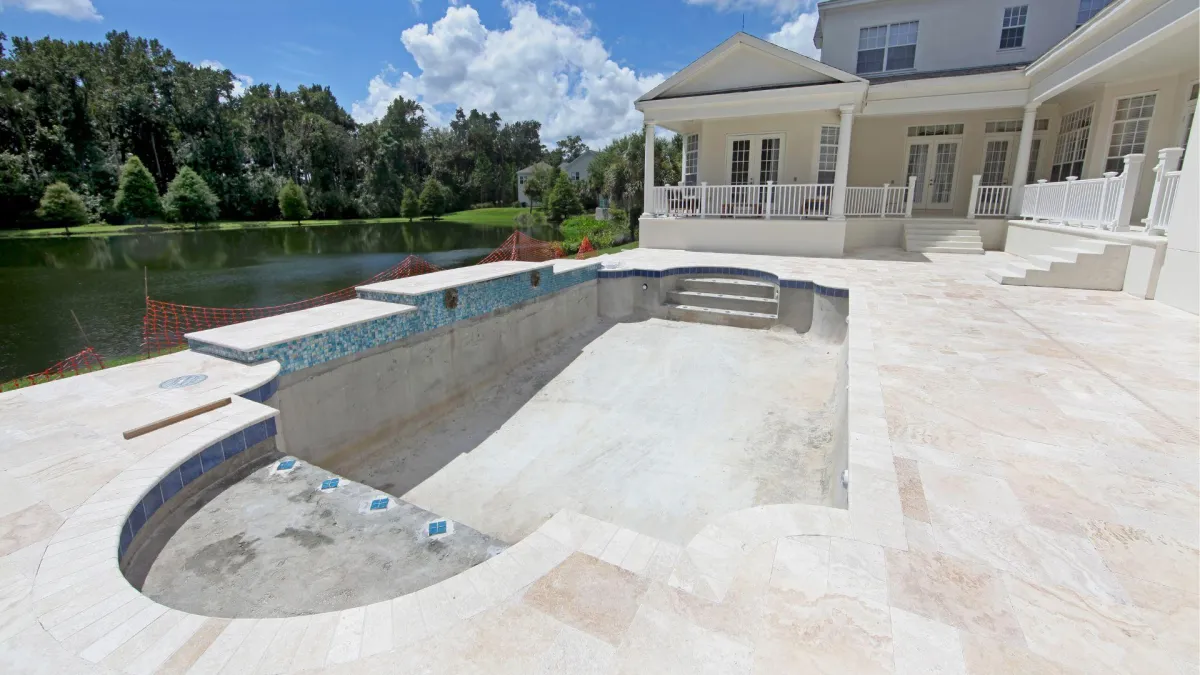
Resurfacing means the old finish comes off and a new one goes on. The surface gets prepped to a sound base, cracks and hollow spots handled, then plaster, quartz, or pebble over a bond coat.
For crazing that is the whole repair. For a structural crack it is the second half of the job, the part that makes the fix disappear.
A few desert notes. Hard water is rough on new finish, so brushing and chemistry in the first month decide how the surface looks in year five. Pebble and quartz hold up better against our calcium than white plaster. Blow-sand during monsoon season, July through September, is a real reason to plan around an open shell. Detail lives on the pool resurfacing and replastering in La Quinta page.
Swimming pool renovations
If the pool is already drained and prepped, the cost of changing other things drops. Owners often use a structural repair as the moment to do what they put off.
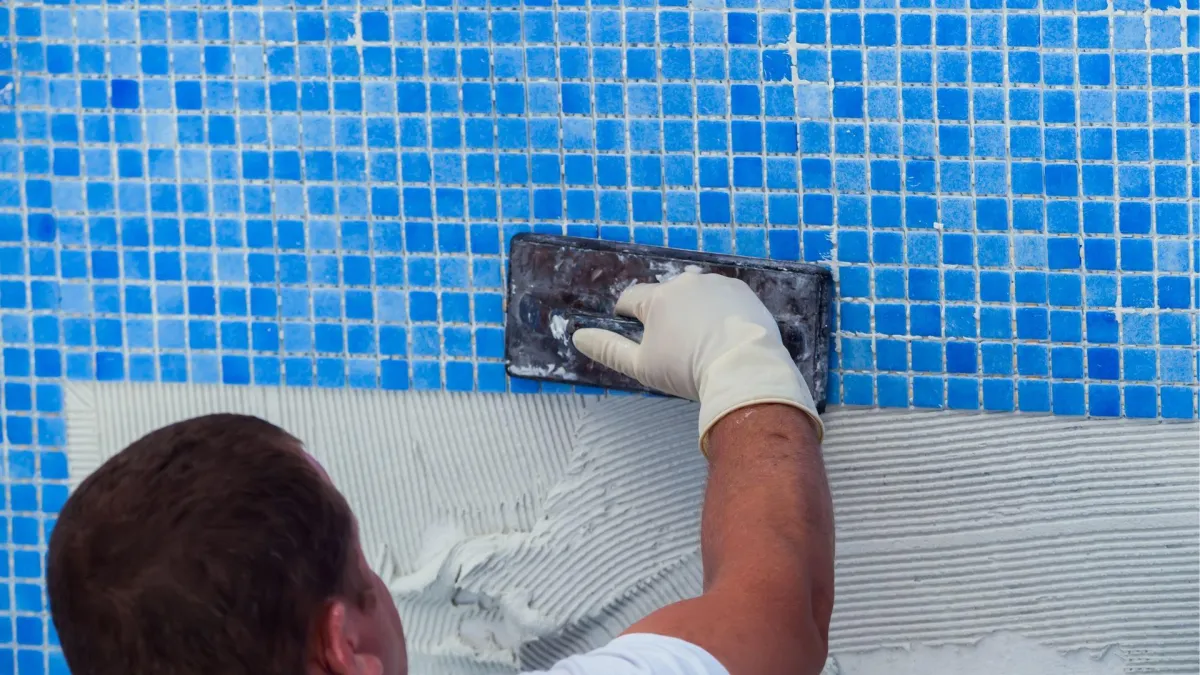
The common ones: new waterline tile, since the old tile comes off along the crack line anyway and matching forty-year-old tile is near impossible; new coping; the light swapped to LED; the equipment pad brought current. Tile work on its own is on the pool tile installation and tile repairs in La Quinta page.
Nobody should be pushed into a remodel over a crack. But if the tile is dated and the shell is open, doing it now costs less. See pool remodeling in La Quinta for scope.
General repairs
A good share of crack calls turn into ordinary repairs. A hairline gets a note and a photo for the file. A cracked skimmer throat gets replaced. A light niche gets resealed. A pump still running at 3,450 RPM since 1998 gets looked at while the tech is there.
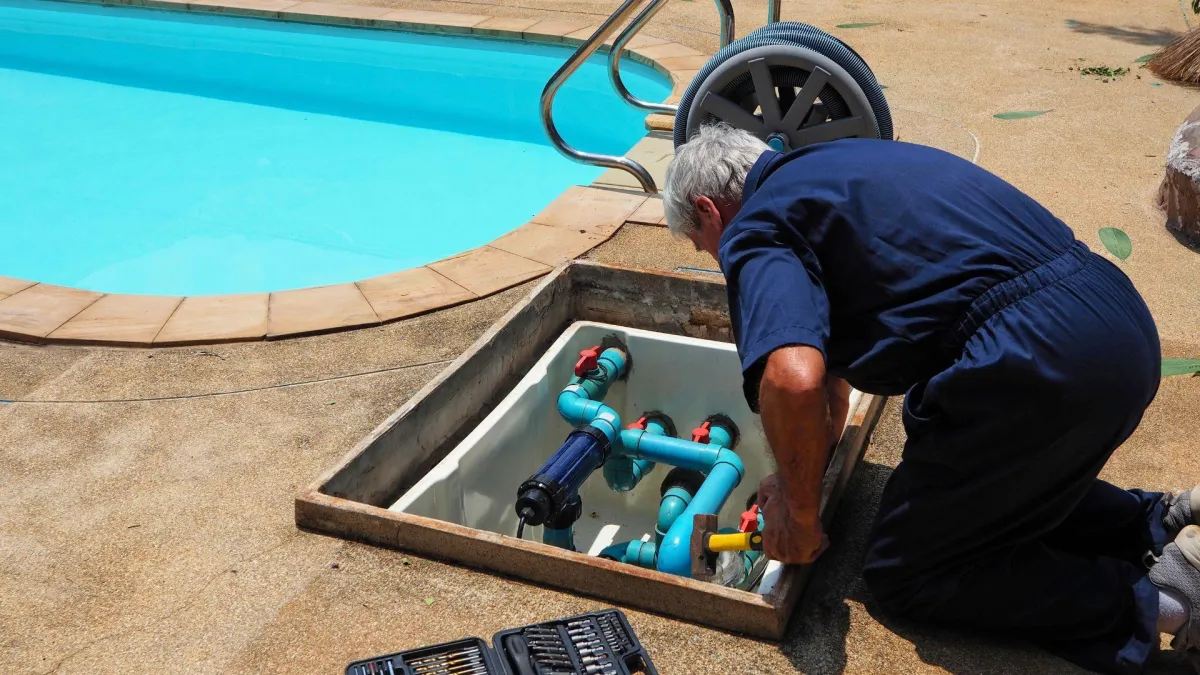
General repairs also cover a valve that will not hold, a cracked union, a filter eating blow-sand, a heater that will not fire. The full menu is on the swimming pool repair service in La Quinta page, and everything CV Pools does is at swimming pool services in La Quinta.
What not to do about a cracked pool shell
Do not treat pool putty or a store-bought crack sealer as the fix. Underwater putty is a stopgap that buys a few weeks. On a structural crack it hides the line, so nobody can see whether the crack is still moving, and that is what the repair depends on.
Do not wait three years to see if it gets worse. Watching on purpose, with a mark, a measurement, and a date, is a plan. Ignoring it until the deck cracks on the same line is not.
Do not take a bid from anyone who quotes a structural crack without getting in the water. Honest pool crack repair La Quinta starts in the water, not on the deck at noon.
Some cracks call for a structural engineer instead of a pool contractor: big vertical displacement, a shell that has clearly moved, repeat cracking after a repair, or a slope failure behind the pool. A licensed contractor should say so instead of guessing. Permitting can come into play on major structural work.
Why pool shells crack here
Soil does most of it. Ground here swells when wet and shrinks when dry. A pool is a big rigid box sitting in that. Soak one side, leave the other dry, and the box gets pushed.
It might be a drip line running long on one side for years, or a downspout dumping at the same corner every monsoon storm. Around the Avenida Montezuma blocks that pattern is common, because older irrigation was laid close to the pool and left alone.
Then there is grade. Along the Avenue 60 corridor and streets climbing toward the hill, pools sit on cut-and-fill pads, half on native ground and half on engineered fill. Those halves settle at different speeds, and that is where the classic diagonal off a corner shows up.
Age matters too. Shells around the Calle Sinaloa blocks often come from an earlier era, before some of the steel and joint practices standard now. A forty-year-old shell has seen forty summers at 115 degrees and forty cold Januaries. Concrete moves with that. The last cause, though, is the one owners create themselves.
Do not drain your pool. Not to see the crack, not because a neighbor said to. An empty shell can crack, lift, or float on groundwater and hydrostatic pressure, and a pool that was fine can be ruined in a weekend. Old plaster dries and checks fast in this heat. If the pool has to come down, a contractor decides when and how fast, and there are rules about where that water may go.
Transform Your Backyard into a Stunning Oasis with Our
Pool Repair and Construction Services
Revitalize your outdoor space with expert repairs that make your pool look brand new.
You deserve peace of mind knowing your pool repairs are handled by trusted experts.
Pool Equipment Check-Up 1 year maintenance Check-Up package to ensure long-term satisfaction.
Questions People Actually Ask
Is a hairline crack in my pool a big deal?
Usually not. If it is one of many fine lines spread in a web across the plaster, that is crazing, and it lives in the finish, not the shell. It looks worse every year but rarely leaks. A single hairline standing alone, off a corner, deserves a closer look.
How do I know if the crack is structural?
Four signs together: one line instead of a web, a lip your fingernail catches, the line continuing up through the waterline tile, and an angle running out of a corner or step. Add water loss and it is likely structural. Nobody confirms that from the deck.
My pool loses water and has a crack. Are they related?
Maybe, but that is not the first place to look. Most water loss is plumbing, not shell, and in summer you lose about a quarter inch a day to evaporation. Lines get pressure tested first. If the plumbing holds, the crack becomes the suspect. That order saves people from paying for shell work.
Can you fix a pool crack without draining the pool?
Small cosmetic patches underwater exist and buy time. A real structural repair cannot be done with water in the pool. Routing, injecting, stapling, and bonding new finish all need a dry surface. A contractor decides when the pool comes down, because draining it wrong causes damage.
Should I drain the pool while I decide what to do?
No. This is the most common way owners damage their own pool here. An empty shell can lift or crack from groundwater and hydro static pressure, and old plaster checks fast in this heat. Leave the water in and let a contractor call it.
Is it safe to swim with a crack in the pool?
Most of the time, yes. Crazing and stable hairlines are cosmetic. The reason to stay out is a sharp edge that cuts feet, or loose plaster that pulls free. If the pool is losing water fast or the shell has moved, stop using it.
Will the repair be invisible?
Not if you patch one line in an old surface. New material never matches plaster carrying ten years of sun and calcium. That is why a structural repair comes packaged with resurfacing. After a full refinish you will not find the line.
Does a crack mean the whole pool has to be replaced?
Almost never. Gunite shells are repairable, and stapling and injection handle a lot. Full replacement is for shells that failed, moved badly, or cracked again after a proper repair. If the first person you call goes straight to replacement, get a second opinion.
Does homeowners insurance cover a cracked pool?
Usually not for cracks from soil movement, settling, or age, which is most of them. Sudden damage from a covered event is a different story. Take dated photos, keep the diagnosis in writing, and ask your carrier before assuming.
Facebook
Instagram
LinkedIn
Youtube